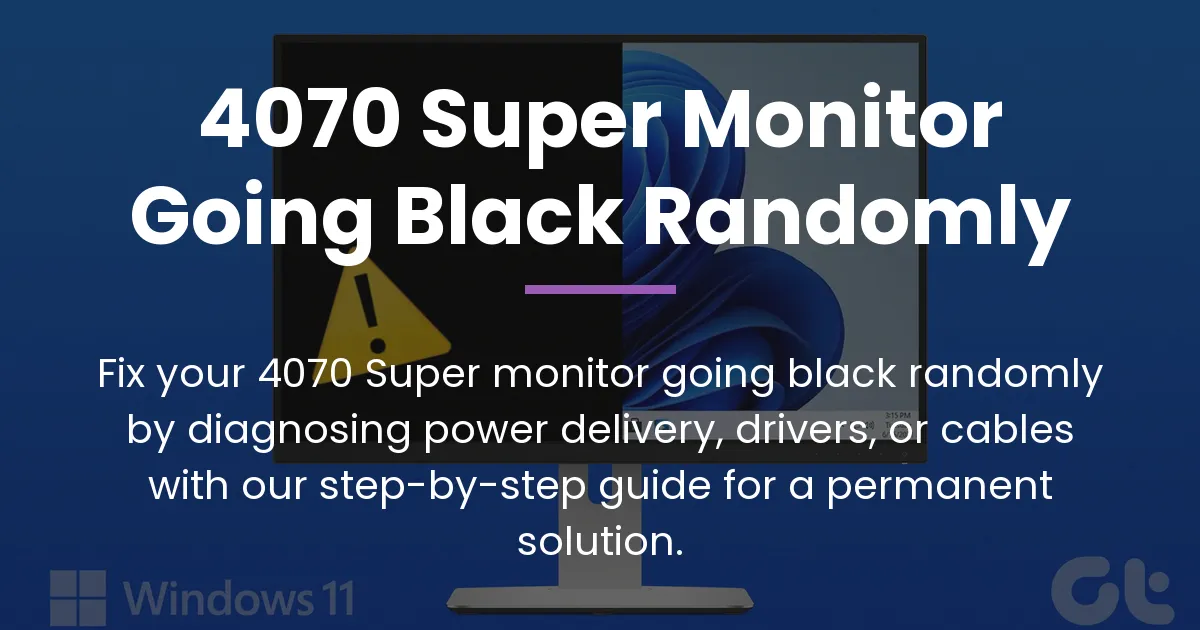
If your 4070 Super monitor is going black randomly, you are not alone. This frustrating problem interrupts gaming and work, but a systematic approach can solve it. By following a logical diagnostic process, you can find the root cause and apply the correct fix for good.
What to Do When Your 4070 Super Monitor Goes Black Randomly
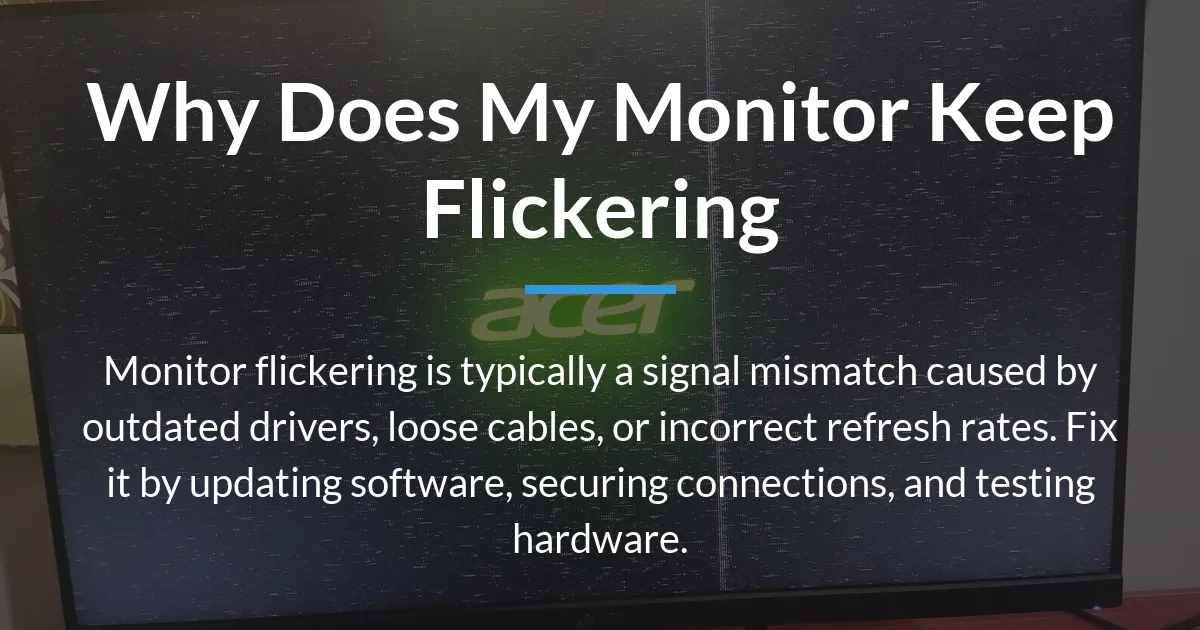
When your screen suddenly turns black, stay calm and observe. Listen for system sounds or fan noise to see if your computer is still running. If you hear audio, the issue is likely with the display signal and not a full crash.
Check the video cable connections at both the GPU and monitor. A loose cable can cause intermittent black screens. Try reseating it firmly or use a different DisplayPort or HDMI cable if available. After that, force a reboot by holding the power button and note any patterns, like if it happens only during gaming.
Diagnosing the Signal Behind the Black Screen
Understanding what happens during the black screen helps narrow down causes. If the screen goes black and the GPU fans spin at 100% while the system freezes, this points to a critical GPU or system crash. This often means a hardware or power issue.
If the fans stay normal and audio continues, it suggests a display signal or driver problem. The GPU is working but not sending video. When black screens occur only in specific games or under load, stability issues related to power or heat are likely.
Intermittent black flashes or short dropouts usually indicate cable or port faults. By recognizing these patterns, you can focus your troubleshooting efficiently instead of trying random fixes.
Software and Driver Troubleshooting
Driver conflicts are a common cause of random black screens with the RTX 4070 Super. Start with a clean driver installation using Display Driver Uninstaller (DDU). Download DDU from a trusted source and run it in Safe Mode to remove all old Nvidia driver traces.
After DDU, get the latest driver directly from Nvidia’s website. During installation, choose the custom option and select “Perform a clean installation” to prevent conflicts. Then, disable Windows Driver Auto-Update in System Settings to stop automatic updates that might break things.
Software like MSI Afterburner can also cause instability. Uninstall Afterburner or other tuning tools temporarily to test if the black screens stop. If they do, reinstall with default settings or avoid overclocking until stability is confirmed. Check for other background apps that might interfere with GPU performance.
Inspecting Physical Connections and Cables
Physical issues are often overlooked but easy to fix. Use a certified, high-quality DisplayPort or HDMI cable. Cheap or damaged cables can lead to signal loss, so try a different DP or HDMI cable to rule this out. Look for certification logos on the cable for assurance.
Pay close attention to the 12VHPWR power connector on your RTX 4070 Super. This connector must be fully seated with an audible click to ensure proper power delivery. Inspect the ports on your GPU and monitor for damage or debris, and clean them gently if needed.
If you have a modular power supply, try using another 12VHPWR cable to eliminate cable faults. Also, check all power connections to the GPU, including additional PCIe cables, to ensure they are secure. Loose power connections can cause black screens under load.
The Power Supply Deep Dive
Power delivery is critical for the RTX 4070 Super, and inadequate power can cause random black screens. Even with a high-wattage PSU, transient power spikes—sudden power demands—can overwhelm it, leading to instability. The 4070 Super can draw high power briefly during gaming.
Monitor your system’s 12V rail stability using HWINFO64. Look for voltage fluctuations under load; if the 12V rail drops significantly, it might mean an underpowered or failing PSU. Consider upgrading to a quality power supply with at least 750W and good transient response from a reputable brand.
The 12VHPWR connector itself can be a point of failure. Ensure it is properly seated and consider using a dedicated cable from your PSU rather than adapters. If black screens persist, trying a new PSU or another 12VHPWR cable can quickly confirm if power is the issue. Many users resolve similar problems this way.
Stress Testing and Monitoring for Stability
After applying fixes, verify the problem is truly resolved. Use stress testing software like FurMark or 3DMark Time Spy to push your GPU to its limits. Run these tests for at least 30 minutes to an hour to simulate heavy gaming loads. If no black screens occur, the fix is likely working.
For detailed monitoring, use HWINFO64. Set it to log sensors during stress tests or gaming. Key metrics include GPU temperature, power draw, and 12V rail voltage. Look for patterns like temperature spikes above 80°C or voltage drops below 11.5V, which can indicate cooling or power issues.
Define a successful stability test by ensuring consistent performance without crashes. If you pass several hours of stress testing and normal use, the issue is probably fixed. However, if black screens return, review logs to pinpoint triggers like specific applications or power states.
When to Consider Hardware Replacement or RMA
If software and connection troubleshooting fail, the problem may be hardware-related. Isolate the GPU by testing it in another computer if possible. If the same black screens occur, it confirms a GPU fault. Alternatively, try a different GPU in your current system to see if the issue persists.
When contacting the manufacturer for an RMA, provide detailed information. Include logs from HWINFO64 or Windows Event Viewer, descriptions of black screen patterns, and steps you’ve taken. Brands like ASUS, MSI, or Gigabyte have specific RMA processes, so check their websites for guidelines.
Signs that your GPU needs an RMA include persistent black screens after all fixes, artifacts on the screen, or the GPU not being detected. If within warranty, pursue an RMA for a faulty unit to get a replacement.
Frequently Asked Questions
Can a faulty monitor cause this issue with an RTX 4070 Super?
Yes, a faulty monitor can cause black screens, but it is less common. Test by connecting your PC to a different monitor or TV. If the black screens stop, your monitor might be defective. Also, try a different video cable to rule out monitor port problems.
Should I use DisplayPort or HDMI to prevent black screens?
DisplayPort is generally preferred for high refresh rates and resolutions, but both can work well. The key is using a certified, high-quality cable. If you have issues, switch between DP and HDMI to see which connection is more stable for your setup.
How do I check Windows Event Viewer or HWINFO64 logs for errors?
In Windows Event Viewer, open it from the Start menu, then go to Windows Logs and System. Look for error events around the time of the black screen. For HWINFO64, enable logging in settings, start a session, and after a black screen, review the log file for sudden voltage changes or GPU errors.
Does undervolting or underclocking my 4070 Super help?
Undervolting or underclocking can improve stability by reducing power use and heat, which may prevent black screens. Use MSI Afterburner to lower voltage or clock speeds slightly, but do so cautiously to avoid performance loss or new instability.
My screen goes black under load but not on the desktop. What does that mean?
This usually indicates a power or thermal issue. Under load, the GPU draws more power and generates more heat. Check your power supply’s capacity and ensure GPU cooling is adequate. Monitoring temperatures with HWINFO64 can reveal if thermal throttling is causing the black screens.
Is MSI Afterburner or other tuning software known to cause this?
Yes, tuning software like MSI Afterburner can cause instability if settings are too aggressive or if there is a driver conflict. Uninstall it temporarily to test if the black screens stop. If they do, reinstall with default settings or update to the latest version.
Could this be a conflict with Windows 11?
Windows 11 can have compatibility issues with drivers or hardware. Ensure you have the latest Windows updates and Nvidia drivers. If the problem started after a Windows update, consider rolling it back. Check online forums for reports of similar issues with your configuration.
How long should I stress test to be sure the problem is fixed?
Stress test for at least one to two hours under heavy load to simulate extended use. If no black screens occur and monitoring shows stable metrics, the fix is likely effective. For extra confidence, test over several days of normal use.
What are the signs that my GPU itself needs an RMA?
Signs include constant black screens despite all fixes, visual artifacts, system crashes, or the GPU not being detected in Device Manager. If testing in another system yields the same issues, contact the manufacturer for an RMA.
If a new PSU fixes it, was my old GPU damaged?
Not necessarily. An inadequate PSU can cause instability without damaging the GPU. Once you install a proper PSU, monitor the GPU for any new issues. If it runs stable, the GPU is probably fine, but watch for future problems from prior stress.
Dealing with a 4070 Super monitor going black randomly is tough, but this guide provides a clear path from diagnosis to fix. By understanding symptoms, troubleshooting methodically, and validating stability, you can restore your system and enjoy uninterrupted performance.