Many Windows users look for ways to boost their setup by adding extra screen space. Turning an iPad into a second monitor offers a portable and cost-effective solution for multitasking.
However, Apple’s ecosystem doesn’t natively support this with Windows PCs. Third-party apps fill this gap, making the iPad as a second monitor Windows setups reliable and straightforward.
Building on this possibility, you’ll need to check your devices first. Ensure your iPad runs a recent iOS version and your Windows PC meets the app’s minimum requirements, like Windows 10 or later.
Consequently, this guide walks you through everything from basics to advanced tips. By the end, you’ll have a smooth extended display without needing new hardware.
Using Your iPad as a Second Monitor for Windows
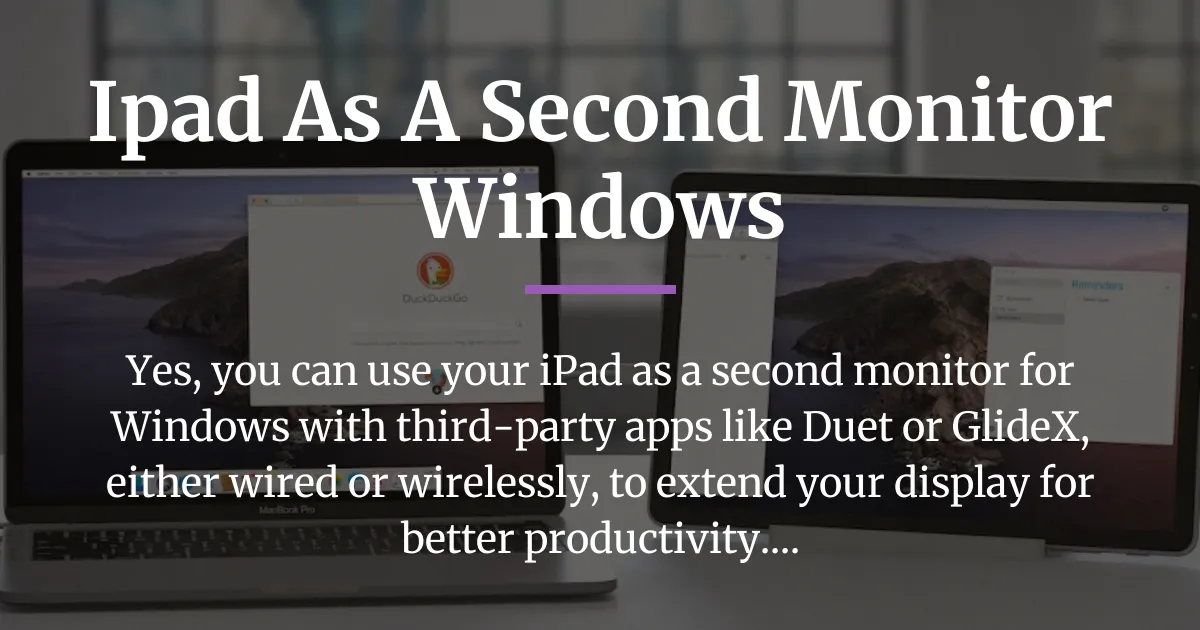
Yes, you can absolutely use your iPad as a second monitor for Windows through dedicated apps that bridge the platforms. These tools turn your tablet into an extended or mirrored display, perfect for spreading out windows or boosting productivity on the go.
While native features like Sidecar work only with Macs, apps such as Duet or Splashtop provide similar functionality for Windows. This setup lets you drag apps across screens seamlessly, just like a traditional monitor.
Moreover, the process starts with downloading the right software from the App Store and Microsoft Store. Once installed, you can choose between wireless Wi-Fi connections or a stable USB cable link for lower lag.
Therefore, compatibility plays a key role in success. Most iPads from 2015 onward work well, but older models might face resolution limits or connection hiccups.
Basic Ways to Connect Your iPad to Windows
Following the confirmation that it’s possible, let’s explore the main connection methods available. You have two primary options: wireless over your home network or wired using a USB cable, each with its own strengths.
Wireless connections rely on apps like GlideX, which is free for basic use and supports both iPad and Windows without extra hardware. This method shines for flexibility, allowing you to move your iPad around while keeping the link active.
However, wired setups using apps like Duet offer more reliability, especially in environments with spotty Wi-Fi. They connect via USB-C or Lightning cables, providing a direct line that reduces delays in display updates.
In addition, free versus paid choices affect your experience. Free apps handle simple mirroring, while paid ones unlock features like touch input or higher resolutions for professional tasks.
Thus, start by assessing your needs, such as mobility for a work laptop or stability for creative work. Bullet points can help map this out quickly:
- Wireless: Ideal for casual use; requires strong Wi-Fi; apps like GlideX or Splashtop.
- Wired: Best for low latency; needs a cable and drivers; apps like Duet or Wired XDisplay.
- Free options: Basic extension; limited features; check App Store for GlideX.
- Paid options: Advanced controls; around $10-20 one-time; Duet for cross-platform support.
How iPad Connections Work with Windows Displays
Now that you know the basic ways, understanding the mechanics helps you pick the best fit. These apps essentially stream your Windows desktop to the iPad, treating it as an additional display in your system’s settings.
For instance, in Windows Display Settings, the iPad appears as a second screen once connected. You can then choose to extend, duplicate, or use only the iPad, mirroring how external monitors function.
Furthermore, the connection involves software on both ends that handles video compression and input relay. Wireless methods use your local network to send data packets, which is why a stable 5GHz Wi-Fi band matters for smooth performance.
Consequently, wired connections bypass the network entirely, sending signals directly through the cable like a USB display adapter. This avoids compression artifacts, ensuring sharper images at the iPad’s native resolution.
Wireless Setup Basics
Shifting to wireless specifics, begin by ensuring both devices are on the same Wi-Fi network. Apps like GlideX prompt you to scan a QR code from your PC to pair the iPad quickly.
After pairing, adjust your Windows settings to recognize the iPad as an extra monitor. This step involves right-clicking the desktop and selecting Extend these displays for full use.
However, keep in mind that network speed affects quality. Slower connections might introduce slight delays, making it less ideal for fast-paced tasks like video calls.
Wired Connection Mechanics
On the wired side, the process starts with installing USB drivers for your iPad on Windows. Tools like iTunes or the Apple Devices app from Microsoft ensure proper recognition.
Once drivers are set, plug in the cable and launch the app on both devices. The iPad should pop up in Display Settings almost instantly, ready for arrangement as a second monitor.
Additionally, this method supports touchscreen transmission if the app allows it. You can then use the iPad not just for viewing but for direct interaction with Windows apps.
Step-by-Step Setup for Your iPad and Windows PC
With the workings clear, it’s time to dive into actionable steps for setup. This section guides you through choosing and installing an app, then connecting everything securely.
First, decide on your app based on needs, such as free GlideX for starters or feature-rich Duet for pros. Download the Windows version from the official site or Microsoft Store, and the iPad app from the App Store.
To compare options effectively, consider this table of key apps:
| App | Connection Type | Cost | Key Features | Best For |
|---|---|---|---|---|
| GlideX | Wireless/Wired | Free (Premium $5/mo) | Easy pairing, basic extension | Beginners, casual use |
| Duet | Wireless/Wired | $14.99 one-time | Touch support, high res, pressure sensitivity | Creative work, professionals |
| Splashtop Wired XDisplay | Wired | Free trial, $12.99 | Low latency, stable USB link | Stable setups, video editing |
Building on your choice, follow these numbered steps for a typical wireless setup using GlideX. Adapt them slightly for other apps, but the core flow remains similar.
- Install GlideX on your Windows PC from the Microsoft Store and on your iPad from the App Store.
- Launch the app on both devices and ensure they connect to the same Wi-Fi network.
- On your PC, open GlideX and select your iPad from the device list, or scan the QR code shown on the iPad screen.
- Once paired, go to Windows Settings > System > Display, and arrange the iPad as your second monitor by dragging the screen icons.
- Test the connection by dragging a window to the iPad; adjust resolution and orientation if needed in the app settings.
Troubleshooting Common Issues
If the setup hits a snag, start by checking firewall settings on Windows, as they can block app connections. Temporarily disable them or add exceptions for the software to resolve this.
Another frequent problem involves outdated drivers, especially for USB setups. Update your Windows PC via Device Manager and restart both devices to refresh the link.
Moreover, for wireless lag, switch to a less crowded Wi-Fi channel or move closer to the router. This simple tweak often restores smooth performance without further changes.
Real-World Performance and Hidden Drawbacks
After mastering the setup, real usage reveals nuances worth knowing. While convenient, these connections aren’t perfect, with factors like latency impacting certain workflows.
For example, in video editing or gaming, wireless methods might show noticeable delays due to data compression over the network. Wired options minimize this, but even they can’t match a dedicated monitor’s refresh rate.
Handling Latency in Everyday Use
Addressing latency head-on, optimize by closing unnecessary background apps on both your iPad and PC. This frees up resources, allowing faster screen updates and reducing stutter.
Furthermore, for gaming enthusiasts, apps like Moonlight can stream from your Steam library to the iPad with low enough latency for casual play. Pair it with a controller for a more immersive second screen experience.
However, avoid high-motion tasks wirelessly if your network involves much compression. Instead, reserve the iPad for static content like email or documents to keep things fluid.
Security Considerations for App Connections
Turning to security, third-party apps transmit display data, so choose ones with end-to-end encryption to protect against snooping. Duet and Splashtop include this, but always review permissions before granting access.
Additionally, be wary of IP geo-restrictions in some apps that limit features based on location. Use a VPN if needed, but test it doesn’t interfere with local network discovery.
Consequently, enable Windows Firewall rules specifically for the app to block unauthorized network requests. This balances usability with protection, especially on shared home networks.
Long-Term Maintenance Tips
Beyond initial hurdles, updates can sometimes break connections, so check app changelogs regularly. Roll back to a stable version if a new release causes issues on Windows 11.
Also, monitor your iPad’s battery, as constant use as a display drains it faster than normal. Keep it charged via USB during sessions to avoid interruptions.
Advanced Optimization for Better Results
With drawbacks in mind, elevate your setup through targeted tweaks. These go beyond basics, focusing on integration for specific uses like creative apps or remote work.
For instance, enable the virtual monitor feature in Duet to use the iPad as a touchscreen for drawing in software like Photoshop on Windows. This adds pressure sensitivity, turning your personal iPad into a portable graphics tablet.
Moreover, integrate shared keyboard and mouse across devices for seamless control. Apps support this, letting you type on the iPad while viewing on your PC, ideal for cramped desks.
However, for older iPads, stick to lower resolutions to prevent performance dips. This ensures compatibility without forcing an upgrade, maximizing your existing hardware.
In creative workflows, position the iPad as a reference screen for color grading. Its display quality rivals many portable monitors, enhancing accuracy without extra cost.
Finally, explore desktop-to-desktop sharing if you have multiple PCs. Some apps allow extending from one Windows machine to another via the iPad, creating a multi-device hub.
Frequently Asked Questions
Can I Use iPad Pro as a Second Monitor Windows Setup?
Yes, iPad Pro models excel as a second monitor for Windows thanks to their sharp Retina displays and USB-C connectivity. Apps like Duet integrate smoothly, supporting high resolutions for detailed work.
Just verify your Pro model’s iPadOS version meets the app’s needs, and install necessary drivers on your PC for optimal performance.
How to Use iPad as a Second Monitor Windows 10?
For Windows 10, opt for Splashtop Wired XDisplay from the Microsoft Store for a stable USB connection. Enable extended display in PC settings after linking the devices.
Wireless works too, but a solid Wi-Fi setup prevents lag; refer to the basic connection methods for full details.
Is There a Free Way to Use iPad as a Second Display for Windows?
Yes, GlideX offers a free tier for basic mirroring and extension between iPad and Windows. It avoids costs while providing core functionality, though advanced low-latency modes need payment.
Steer clear of untrusted free apps to safeguard your data, sticking to reputable ones from official stores.
What About iPad as Second Monitor Windows 11 Reddit Tips?
Reddit users suggest temporarily disabling Windows 11 firewalls during initial setup and using Ethernet for wired stability. For free options, community favorites include GlideX with tweaks for update compatibility.
Test connections post-Windows updates, as they can alter driver behaviors; community threads often share quick fixes.
Can I Connect iPad as a Second Monitor Windows Cable?
Absolutely, cable connections via USB-C or Lightning deliver the lowest latency for iPad as a second monitor Windows use. Install Apple USB drivers first on your PC to enable detection.
This method suits tasks needing real-time response, like coding or design reviews.
Does iPad as a Second Monitor for Windows Laptop Drain Battery Fast?
Yes, running as a second monitor accelerates iPad battery drain, particularly over wireless. Plug it in during use and lower screen brightness to conserve power.
Check the performance section for more tweaks to balance runtime and efficiency.
Is Sidecar Available for iPad as Second Monitor Windows?
No, Sidecar is exclusive to Apple devices and doesn’t support Windows for iPad extension. Turn to cross-platform apps like Duet for equivalent features on your PC.
These alternatives often exceed Sidecar in flexibility across ecosystems.
How to Handle Latency When Using iPad as Second Monitor Windows Reddit?
Reddit advice includes prioritizing 5GHz Wi-Fi and minimizing open apps to cut latency in iPad as a second monitor Windows setups. For intensive uses, default to wired connections over wireless.
Community tests show Ethernet boosts further, especially in multi-device homes.
In wrapping up, using your iPad as a second monitor Windows enhances your workflow without major investments. With the right app and tweaks, it becomes an indispensable tool for daily tasks.
Experiment with the setups shared here to find your ideal configuration. This approach ensures productivity gains tailored to your needs.