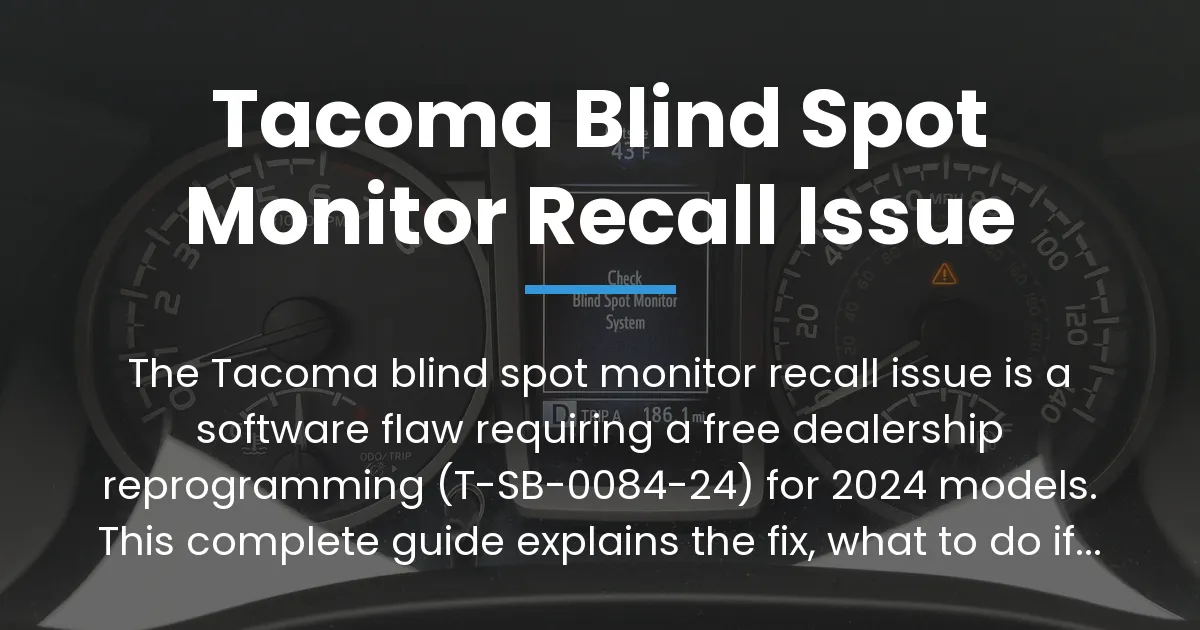
If you’re here, you’ve likely received a notice, seen a warning light, or read stories online about problems with your truck’s safety system. The widespread tacoma blind spot monitor recall issue is real, frustrating, and centered on a specific software flaw in certain 2024 models. Officially identified as Technical Service Bulletin T-SB-0084-24, this recall mandates a free software reprogramming at your Toyota dealership to correct the problem. Let’s cut through the forum noise and provide a clear, actionable path from diagnosis to a verified solution, especially if the first fix attempt doesn’t work.
Understanding the Tacoma Blind Spot Monitor Recall
This recall is not about a broken physical part. It is exclusively a software issue. A programming error in the Blind Spot Monitor control module can cause the system to behave unpredictably, compromising its reliability.
Official Recall Scope and Symptoms
The recall is specific to the 2024 Toyota Tacoma. It affects trucks built within a certain period, which is why checking your Vehicle Identification Number is the only sure way to confirm inclusion. The faulty software can manifest in a couple of key ways that you may have experienced.
First, the system might become completely unavailable. You will see a “Blind Spot Monitor Unavailable” message on your dashboard display, effectively turning off this safety feature without warning. Second, it can cause false alarms. The orange warning light in your side mirror might illuminate or flash when there is no vehicle in your blind spot, or the audible alert might sound unnecessarily. This erodes trust in the system and can be a significant distraction while driving.
The Technical Reason for the Reprogramming
While forum users might call it “sloppy code,” the core issue is a logic error in the software’s decision-making process. Think of the Blind Spot Monitor system as a computer constantly reading data from radar sensors behind your rear bumper. The original programming had a flaw where, under certain specific conditions, it could misinterpret this sensor data.
This misinterpretation could tell the computer to do one of two incorrect things. It might decide the sensor data is implausible and shut the whole system down as a safety precaution, leading to the “unavailable” message. Alternatively, it might incorrectly calculate that an object is in your blind zone when it isn’t, triggering a false warning light or beep. The reprogramming, or software update, simply replaces this flawed logic with corrected code that properly interprets the sensor signals.
What the Recall Service Entails
Knowing what to expect during the service appointment can ease anxiety and help you ensure the job is done correctly. The fix is performed entirely with computers and does not involve replacing any physical parts like sensors or light bulbs.
The Dealership Programming Procedure
A certified Toyota technician will perform the repair. They will connect a dedicated diagnostic computer, known as Techstream, to your Tacoma’s onboard port. Through this system, they download the updated software calibration file directly from Toyota’s servers. This file is then installed, or “flashed,” onto the Blind Spot Monitor control module, overwriting the old, faulty programming. The entire reprogramming process itself is relatively quick, but the total dealership visit typically takes three to four hours. This longer timeframe allows for proper pre-update diagnostics to confirm the issue, the software flash itself, and a post-update verification process to ensure the new code is active and communicating correctly with the truck’s network.
Parts and Labor Coverage
This is a completely free repair. Toyota covers one hundred percent of the costs associated with this specific recall. This includes all necessary diagnostic time to confirm the recall condition, the technician’s labor to perform the programming, and the use of the dealership’s tools and software. You should not be charged for anything related to diagnosing or fixing the problem outlined in T-SB-0084-24.
Getting Your Tacoma Blind Spot Monitor Fixed
Moving from knowing about the recall to getting it successfully resolved requires a bit of preparation. Being organized and clear can prevent misunderstandings at the service department and lead to a smoother experience.
How to Verify Your Vehicle is Included
Do not rely solely on hearing about the recall from others. Always confirm with your unique VIN, which is found on your driver’s side dashboard or door jamb. You have two reliable options. First, visit the National Highway Traffic Safety Administration website and use their recall lookup tool. Second, log into the Toyota Owners portal online or via the app and check your vehicle’s recall status there. Both systems use your VIN to give you a definitive yes or no answer.
Your Pre-Service Checklist
Before you drive to the dealership, take these steps. Print your recall notice or have the reference number T-SB-0084-24 handy. Jot down notes about when the problem occurs. For example, “false alarm on highway when no cars are nearby” or “system shuts off every other day during my commute.” Book your appointment specifically for “Recall T-SB-0084-24 for Blind Spot Monitor reprogramming.” Finally, be prepared to state clearly that you do not authorize any charges for diagnosis or repair of the recalled condition, as it is a free remedy.
Communicating with the Service Department
When you arrive, be direct and specific with the service advisor. You can say, “I’m here for recall T-SB-0084-24, the Blind Spot Monitor software reprogramming. My truck has been showing [describe your specific symptom]. Please perform the update and provide me with a copy of the repair order that shows the software calibration was completed successfully.” This clear communication ensures they address the right issue and provides you with documentation of the repair.
After the Recall Update
Your job isn’t over once you pick up the truck. Verifying the repair is crucial, especially given the many reports of ongoing issues. Having a plan for what to do if the problem persists is equally important.
How to Test the Blind Spot Monitor Repair
Do not assume the update worked. Test it systematically. Start before you even leave the dealership lot. With the technician present if possible, start the truck and see if the “unavailable” message is gone. Have someone walk behind the rear bumper on each side to see if the mirror warning lights activate as they should. Next, take it for a real-world test on a multi-lane road. Drive with other cars in adjacent lanes to confirm the lights illuminate and turn off correctly as vehicles enter and leave your blind spots. If you use a trailer, connect it and test the Trailer Blind Spot Monitor function, as the systems are related and the update is intended to address trailer-related bugs as well.
When the Recall Repair Doesn’t Work
If your system still shows “unavailable” or gives false alerts after the update, you need a contingency plan. This is the critical gap most information misses. First, return to the dealership immediately. Do not wait. Bring your copy of the repair order and document the continued failure with your phone. Second, ask to speak directly with the Service Manager. Explain that the recall reprogramming did not resolve the issue. Politely request that they contact the Toyota Technical Assistance hotline, an internal support line for dealership techs facing complex problems. Third, discuss with the manager whether a physical BSM sensor diagnostic is now warranted. A faulty sensor can mimic the software problem, and the recall software update will not fix broken hardware. If the dealership is unable or unwilling to escalate, your final step is to contact Toyota Brand Engagement directly to open a case and seek a regional representative’s assistance.
Frequently Asked Questions
Does this Tacoma blind spot monitor recall affect models other than 2024?
As of now, the official recall T-SB-0084-24 specifically targets the 2024 Toyota Tacoma. Earlier generations like the 1st Gen or others are not included in this particular service action, though they may have other unrelated recalls.
Can I perform the blind spot monitor reprogramming myself at home?
No, you cannot. The reprogramming requires Toyota’s proprietary Techstream diagnostic software and a direct connection to their calibration servers, which is only available to authorized dealership technicians. It is not a simple over-the-air update you can initiate from your truck’s screen.
How do I know if my Tacoma’s problem is the recall issue and not a broken sensor?
The recall software issue typically causes intermittent system shutdowns or false alerts. A completely broken sensor often results in a permanent error message for one specific side and no function on that side at all. The recall reprogramming is the first step. If it doesn’t fix the problem, the dealership should then diagnose the sensors for physical faults.
Will the dealership charge me for diagnosing the blind spot monitor before applying the recall fix?
They should not. Diagnosis directly related to confirming the recall condition outlined in T-SB-0084-24 is covered under the recall and is free of charge. Be clear that you are there for the recall service to avoid any confusion.
How long does the blind spot monitor reprogramming recall service usually take?
While the actual programming is faster, you should plan for the dealership to have your truck for about three to four hours. This allows time for vehicle check-in, the required pre- and post-programming diagnostics, and the update itself.
Does this recall relate to the Trailer Blind Spot Monitor update recall?
Yes, they are directly connected. The software that controls the standard Blind Spot Monitor also manages the Trailer Blind Spot Monitor function. The same programming flaw can affect both, which is why the single update, T-SB-0084-24, is intended to resolve issues for both systems.
What should I do if my blind spot monitor warning lights stay on constantly after the update?
This indicates a new or unresolved problem. You should return to the dealership promptly. Constant illumination is not normal operation and could point to a separate sensor fault or an issue with the update installation that needs immediate attention.
Will this fix also address issues with the Rear Cross-Traffic Alert system?
The Rear Cross-Traffic Alert system often uses the same radar sensors as the Blind Spot Monitor. While the primary focus of T-SB-0084-24 is the blind spot function, correcting the core software error may resolve related glitches in the RCTA system, as they are part of the same electronic module network.
Can I refuse the recall service if my blind spot monitor seems to be working fine?
You can, but it is not recommended. Even if the system seems operational now, the underlying software flaw exists and could cause a sudden failure later, potentially at a critical moment. Having the free update applied ensures the system has the correct, reliable programming for the life of your truck.
Where are the blind spot monitor sensors located on a Toyota Tacoma?
The radar sensors are housed inside the rear bumper, one on each side. They are not visibly obvious from the outside. This location is why damage to the rear bumper or alterations like cutting for aftermarket exhaust tips can affect sensor performance.
The tacoma blind spot monitor recall issue is a well-defined software problem with a clear, free solution. While the process can be complicated by update failures or underlying sensor issues, using this guide gives you the knowledge to navigate from receiving the notice to achieving a fully functioning safety system. By verifying your VIN, communicating clearly at the dealership, thoroughly testing the repair, and knowing your escalation path, you can resolve this problem with confidence and get back to trusting the technology in your truck.