You notice a bulky device on someone’s ankle at the store or work, and questions flood your mind. This sight prompts the core query: ankle monitor why? The answer is multifaceted, touching on law, technology, and social policy. Ankle monitors, or electronic monitoring devices, are not just for punishment; they serve as tools for supervision, safety, and rehabilitation. This guide explores the real reasons behind their use, from court orders to personal care, demystifying the life of those who wear them and the technology that enables it.
Ankle Monitor Why: The Primary Judicial Reasons
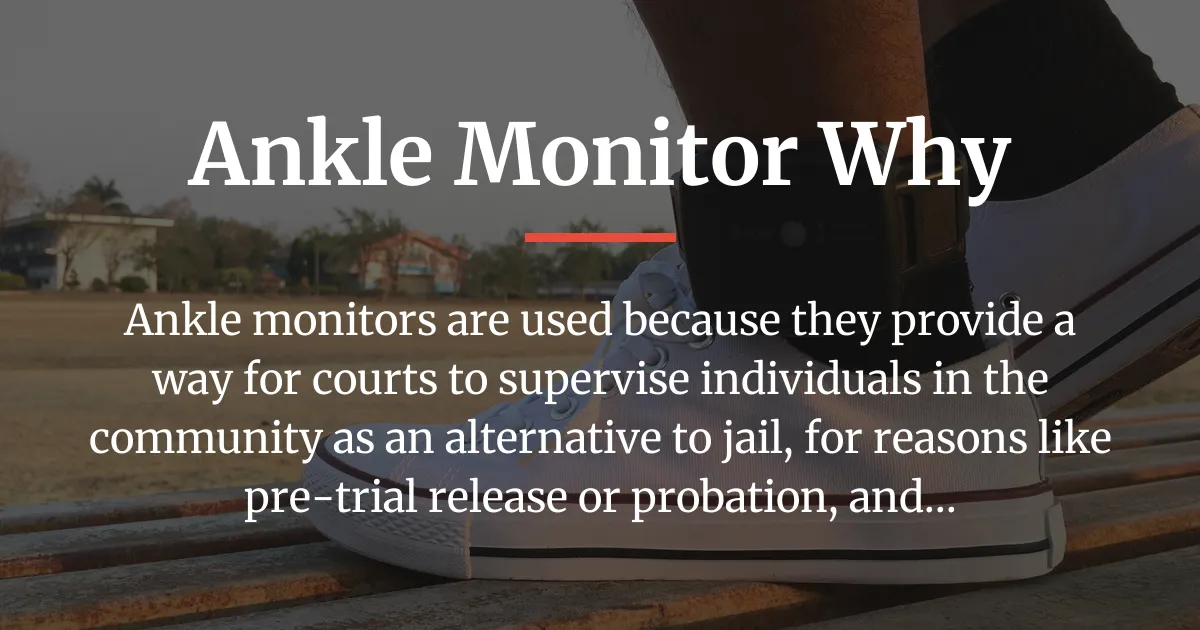
When courts order someone to wear an ankle monitor, it is primarily for community supervision. This concept allows individuals to remain in their homes and communities while under state control, which serves multiple purposes. It reduces the financial burden on the prison system, aids in rehabilitation by keeping families together, and minimizes the social disruption caused by incarceration. The ankle monitor acts as a constant reminder of legal obligations and ensures compliance with court-imposed conditions.
The judicial use of ankle monitors can be broken down into specific scenarios. Each scenario reflects a different stage in the legal process or a particular sentencing philosophy. Understanding these scenarios helps clarify why an ankle monitor is chosen over other forms of supervision.
Pre-Trial Release
Before a trial, if someone is accused of a crime, they might be released from jail with an ankle monitor. This practice addresses jail overcrowding by allowing low-risk defendants to await trial at home. It is based on the principle of innocent until proven guilty, ensuring that individuals are not unnecessarily detained. The monitor guarantees their appearance in court and protects the community by restricting movements.
For example, in many jurisdictions, non-violent offenders with strong community ties are eligible for pre-trial release with electronic monitoring. This reduces the likelihood of flight and ensures that they do not commit new crimes while awaiting trial. The device provides real-time location data, giving authorities confidence in their supervision.
Probation Condition
After conviction, instead of serving time in jail, a person might be placed on probation with an ankle monitor. Probation is a period of supervision in the community, and the monitor enforces specific conditions such as curfews, employment requirements, or avoidance of certain places. It serves as a tool for rehabilitation, allowing the individual to maintain employment and family responsibilities while under scrutiny.
The use of ankle monitors in probation helps prevent recidivism by imposing structure and accountability. Officers can monitor compliance remotely, reducing the need for frequent in-person check-ins. This efficient use of resources benefits both the justice system and the probationer.
Parole Supervision
When released from prison early, parolees may wear ankle monitors to ensure compliance with release terms. Parole is a conditional release from incarceration, and monitoring helps transition individuals back into society. The tracker ensures they adhere to conditions like staying away from criminal associates or attending counseling sessions.
This form of supervision is crucial for public safety, as it provides a layer of oversight for those who have served time for serious offenses. By tracking movements, authorities can intervene quickly if there are signs of re-offending. It also supports the parolee by offering a structured path to reintegration.
Alternative Sentencing
For certain non-violent offenses, courts may use ankle monitors as an alternative to incarceration. This approach is part of restorative justice, focusing on rehabilitation rather than punishment. It keeps individuals in their communities, allowing them to work, pay taxes, and support their families, which can reduce the economic impact of crime.
Alternative sentencing with electronic monitoring is often used for crimes like drug possession, white-collar offenses, or minor thefts. It demonstrates trust in the offender’s ability to reform while ensuring they are monitored. This method is seen as progressive, but it requires careful assessment of risk and needs.
Enforcing Specific Orders
Ankle monitors can enforce restraining orders or domestic violence protection orders. In cases where there is a threat to victims, courts may order the alleged perpetrator to wear a monitor to prevent contact. The device alerts authorities if the wearer enters exclusion zones around the victim’s home, workplace, or other designated areas.
This use prioritizes victim safety by creating a virtual barrier. It allows victims to live without fear while the legal process unfolds. The technology provides peace of mind and a tangible means of enforcement beyond paper orders.
From GPS to SCRAM: How Monitoring Technology Dictates the “Why”
The reason for wearing an ankle monitor often depends on the technology used. Different devices serve different purposes, from confirming presence at home to tracking real-time location or monitoring substance use. The choice of technology directly influences why someone is monitored and how strictly they are supervised.
These devices incorporate various components like batteries, communication modules, and sensors. Their design balances durability with functionality, leading to their bulky appearance. Understanding the technology helps explain the alerts, such as vibrations for tampering or low battery, which are common user concerns.
Radio Frequency (RF) Home Confinement
RF monitors work like an electronic leash for home confinement. A base station is installed at the wearer’s residence, and the ankle device communicates with it via radio signals to verify presence within a limited range, typically a few hundred feet. This technology is used for house arrest, ensuring the person stays at a specific location during set times, such as curfews.
The system is simple and cost-effective, but it only confirms location at home. It does not track movements outside, making it suitable for low-risk cases where confinement is the primary goal. Violations occur if the device moves out of range, triggering alerts to monitoring agencies.
Active GPS Location Tracking
GPS monitors use satellite signals to track the wearer’s movements in real-time across wide areas. This allows for active supervision, such as ensuring they do not enter exclusion zones or go to unauthorized places like schools or victims’ homes. It is used for more mobile supervision where location history is important for compliance.
These devices record location data continuously, which can be reviewed by authorities. They enable features like geofencing, where virtual boundaries are set, and alerts are sent if crossed. GPS tracking is common for probation or parole cases requiring strict movement controls, offering a balance between freedom and security.
Specialized Monitors: SCRAM and Beyond
SCRAM monitors are designed to detect alcohol consumption through skin perspiration, using transdermal testing. They are used for cases involving alcohol-related offenses, such as DUI, where abstinence is a condition. The device samples sweat regularly and sends data for analysis, alerting if alcohol is present.
Other specialized monitors may include biometric sensors for drug detection or health monitoring, expanding the reasons for use beyond simple location tracking. For instance, some devices can monitor vital signs for medical purposes. These innovations show how ankle monitors adapt to specific needs, though they raise privacy and accuracy questions.
The Employment Paradox: Passing Background Checks with an Ankle Monitor
Imagine seeing a hospital janitor with an ankle monitor. This seems contradictory, but it highlights a key point: wearing a monitor does not always mean immediate danger or unemployability. Understanding how someone can pass a background check while monitored requires looking at the context of their offense and employer policies.
Employers conduct risk assessments based on job relevance and nature of the crime. For non-violent, non-theft offenses, especially those unrelated to work duties, employers might still hire individuals on ankle monitors. This is part of societal reintegration, where monitoring allows for supervision while enabling productive employment.
| Example Crime | Why EM Might Be Used | How They Might Pass a Check |
|---|---|---|
| Non-violent DUI | As an alternative to jail for low-risk offenders, allowing them to work and attend treatment. | Employers may consider the crime unrelated to job duties, especially if it doesn’t involve theft or violence. |
| White-collar fraud | To monitor compliance with probation terms while they repay debts or perform community service. | Background checks might focus on job relevance, and some states have “ban-the-box” laws delaying criminal history inquiries. |
| Regulatory offense | For pre-trial release or probation, ensuring they continue working in regulated industries under supervision. | Employers assess risk based on the nature of the offense and the employee’s role, often with legal guidance. |
Many jurisdictions have “ban-the-box” laws that prevent employers from asking about criminal history early in the hiring process. This gives applicants a chance to explain their circumstances, including ankle monitor use, during interviews. Employers may also consider rehabilitation efforts and court supervision as mitigating factors.
The visibility of the monitor can lead to stigma, but some workplaces are accommodating, especially if the offense is old or unrelated. In cases like the hospital janitor, the job may not involve sensitive tasks, making the employer more willing to hire. This paradox shows that ankle monitors can coexist with employment, supporting reintegration.
A Day in the Life: Rules, Restrictions, and Reality of Being Monitored
Living with an ankle monitor involves a strict routine governed by technology and legal terms. The wearer must adhere to numerous rules, which vary based on court orders or monitoring purposes. This daily reality is often invisible to others but deeply impactful on the individual’s life.
The psychological weight of constant surveillance is significant, affecting mental health and social interactions. Wearers may feel isolated or judged, but they also develop strategies to cope. Understanding this routine demystifies the experience and highlights the challenges of electronic monitoring.
Morning Routine and Charging
The day begins with the device charging, typically overnight. The wearer must ensure the monitor is properly attached and has sufficient battery life for the day. Most devices require daily charging for several hours, often during sleep or designated times. Failure to charge can trigger low-battery alerts, leading to violations.
After charging, the wearer checks for any alerts or messages from the monitoring agency. They might have a scheduled call with a probation officer to confirm compliance. This routine sets the tone for a day under strict supervision, where every move is planned.
Travel to Approved Locations
Travel is restricted to pre-approved routes and destinations, such as work, school, or medical appointments. For GPS monitors, the wearer must follow exact paths and avoid exclusion zones, which are areas off-limits by court order. Deviations, even accidental, can result in immediate alerts and potential penalties.
The wearer must plan trips carefully, accounting for traffic or emergencies. Some systems allow for real-time updates via apps, but changes require prior approval. This restriction limits spontaneity and can make simple errands stressful, as any delay might be misinterpreted as a violation.
Work Hours and Social Interactions
At work, the monitor is often visible, leading to questions or stigma from colleagues. Wearers may choose to disclose their situation or conceal it with clothing, but the device’s bulk makes hiding difficult. Employers who are aware may provide accommodations, but many wearers face discrimination or curiosity.
During work hours, the monitor continues tracking location, ensuring the wearer stays at the job site. Breaks or lunch outings must be within approved areas. Social interactions are limited, as friends or family visits might require prior authorization, especially if they occur outside home.
Evening Curfew and Home Confinement
Most monitoring includes a curfew, requiring the wearer to be home by a specific time, often in the evening. RF monitors confirm presence at home, while GPS monitors ensure no unauthorized outings after curfew. The wearer must be inside their residence, with the device communicating with the base station or sending location data.
This confinement can feel isolating, but it also provides structure. Violations, such as arriving home late or leaving without permission, result in alerts. Consequences range from warnings to revocation of release, so adherence is critical for maintaining freedom.
Compliance Checks and Reporting
Regular check-ins with a probation officer or monitoring company are required, which can be in person, by phone, or through data reviews. The wearer must report any issues, such as device malfunctions or personal emergencies, to avoid false violations. These checks ensure ongoing compliance and address any concerns.
The wearer might also need to attend counseling or treatment sessions as part of their conditions. These activities are tracked and verified through the monitor, adding to the daily schedule. The constant reporting reinforces accountability but can be burdensome.
Violation Consequences
Violations, such as entering an exclusion zone, missing a curfew, or tampering with the device, trigger immediate alerts to authorities. Consequences depend on severity and history, including warnings, increased restrictions, or return to jail. The wearer lives with the fear of making a mistake that could jeopardize their freedom.
Technical failures, like GPS signal loss or battery issues, can cause false violations, requiring prompt resolution. This reality underscores the importance of reliability in monitoring technology and the need for human oversight in interpreting alerts.
Beyond Law Enforcement: Medical, Commercial, and Private Uses
Ankle monitors are not solely for criminal justice. They find applications in healthcare, business, and personal contexts, often voluntarily. These uses highlight the versatility of monitoring technology and its potential benefits beyond punishment.
In non-judicial settings, the devices are typically smaller and less intrusive, designed for safety rather than enforcement. However, they still raise ethical questions about privacy and consent, especially when used in private relationships.
Medical and Safety Monitoring
For patients with dementia or Alzheimer’s, ankle monitors can prevent wandering and ensure safety. Caregivers use them to track locations and receive alerts if the patient leaves a safe area, such as a home or care facility. This application is non-punitive and focused on protection, often with the patient’s consent or family approval.
Similarly, individuals with cognitive disabilities or mental health conditions might wear monitors to avoid getting lost or to facilitate quick assistance in emergencies. These devices are integrated with healthcare systems, providing peace of mind for families and reducing the burden on emergency services.
Commercial Asset and Personnel Tracking
In logistics and high-risk industries, ankle-like devices track personnel or valuable assets. For example, employees working in remote or dangerous areas, such as mining or security, might wear monitors for safety and accountability. This ensures they can be located in case of accidents or emergencies.
Commercial tracking also extends to high-value cargo, where devices similar to ankle monitors are attached to shipments to prevent theft or loss. These uses emphasize security and efficiency, blending technology with business operations without the stigma of criminal justice.
Private and Familial Monitoring (The Ethical Debate)
Some parents use ankle monitors to track children, particularly teenagers, for safety reasons. Similarly, individuals might use them for personal security, such as during travel or in risky situations. These applications are voluntary and often marketed as safety tools.
However, this raises ethical debates about privacy and autonomy. Without proper consent, especially for children or vulnerable adults, monitoring can become coercive. The line between protection and surveillance is blurry, leading to calls for regulation to prevent abuse in private contexts.
The Great Debate: Effectiveness, Criticisms, and the Future of EM
Electronic monitoring sparks debate about its role in society. Supporters cite benefits like cost savings and rehabilitation, while critics highlight privacy concerns and inequities. Examining both sides provides a balanced view of this complex tool.
Studies show mixed results on effectiveness. For instance, some research indicates that ankle monitors can reduce recidivism for certain offenders by providing structure. However, other studies point to technical flaws and social costs that undermine their benefits.
Criticism: Privacy Invasion and Surveillance Creep
Ankle monitors constantly track location, infringing on personal privacy. Critics argue that this surveillance extends state control into private lives, potentially normalizing constant monitoring. In an era of digital privacy concerns, this invasion is seen as a step towards a surveillance society.
Supporters counter that for public safety, this invasion is justified, especially as an alternative to jail. They emphasize that monitoring is temporary and targeted, with data used solely for supervision. The trade-off is between individual rights and community security, requiring careful legal safeguards.
Criticism: Net-Widening and Social Control
Critics say electronic monitoring expands social control to more people who might otherwise not be jailed, a phenomenon called net-widening. This can lead to over-supervision of low-risk individuals, increasing their burden without clear public safety benefits. It also disproportionately affects marginalized communities, perpetuating inequalities.
Proponents point out that it reduces jail overcrowding and costs, allowing for supervised release. Data from some jurisdictions shows cost savings, but concerns about over-surveillance remain. The future may involve stricter criteria to ensure monitors are used only when necessary.
Criticism: Technical Failures and Injustice
Devices can malfunction, leading to false alerts or missed violations. Cases exist where errors have unjustly penalized wearers, such as false tampering alerts due to skin irritation or GPS drift in urban areas. These failures undermine trust in the technology and can result in unfair punishments.
Improvements in technology aim to increase reliability, but human oversight is still crucial. Monitoring agencies must investigate alerts thoroughly to avoid injustices. As technology advances, incorporating better sensors and AI could reduce errors, but ethical implementation is key.
Criticism: Equity Issues and Cost Burden
Wearers often pay for monitoring, burdening the poor and creating inequality in justice administration. Fees can include installation, daily rates, and removal costs, adding financial stress to already vulnerable individuals. This can lead to a two-tier system where wealthier offenders avoid monitors due to cost.
Some jurisdictions subsidize costs or offer waivers, but disparities persist. Advocates call for public funding to make electronic monitoring equitable. The debate highlights the need for policies that address economic barriers to fair justice.
Future Developments and Ethical Considerations
Advancements like biometric sensors, AI integration, and smaller devices could make monitors more effective but also more intrusive. For example, future monitors might predict behavior or monitor health metrics, raising new ethical questions about data use and consent.
The future of electronic monitoring will likely involve greater integration with other technologies, such as smart cities or wearable tech. Balancing innovation with privacy and human rights will be critical. Society must decide how to harness these tools for good without compromising fundamental freedoms.
Frequently Asked Questions About Ankle Monitors
Common questions arise about ankle monitors, reflecting public curiosity and confusion. Here are detailed answers to clarify misconceptions and provide essential information.
Why do celebrities like Lindsay Lohan or Anna Delvey get ankle monitors?
Celebrities often receive ankle monitors as conditions of probation or early release for non-violent offenses, such as DUI, theft, or probation violations. It allows them to serve sentences while maintaining work commitments, like filming or public appearances. This highlights the use of electronic monitoring for rehabilitation and public scrutiny, showing that it applies to high-profile individuals similarly to others.
Can you travel or go on vacation with an ankle monitor?
Travel is highly restricted and requires advanced written permission from the supervising officer. Any movement outside approved zones, such as for vacation, must be pre-authorized with detailed itineraries. Without approval, leaving these zones triggers immediate violation alerts, potentially leading to penalties. Vacations are rarely approved unless for essential reasons, emphasizing the strict control inherent in monitoring.
What’s the difference between an ankle monitor and house arrest?
House arrest is a condition restricting someone to their home, often with exceptions for work or appointments. An ankle monitor is a device used to enforce that condition or other restrictions. Not all house arrest uses monitors; some rely on phone check-ins. Monitors provide constant verification, with GPS types allowing movement beyond home under specific rules, making them more flexible but invasive.
How long do people typically wear ankle monitors?
The duration varies widely based on the court order or monitoring purpose. It can range from a few weeks for pre-trial release to several years for probation or parole. Some individuals wear them for months, while others might have them for over a year. The length depends on factors like offense severity, compliance, and judicial discretion.
Are ankle monitors comfortable to wear?
They are designed to be durable and tamper-proof, often bulky and uncomfortable. Wearers may experience skin irritation, chafing, or mobility issues, especially during physical activity. The devices are worn continuously except for charging, so discomfort is common. Some newer models are lighter, but trade-offs with battery life and security limit improvements.
Can ankle monitors be removed by the wearer?
Removal attempts trigger immediate tamper alerts, as the devices have sensors detecting cuts or loosening. Unauthorized removal is a serious violation, often leading to arrest or increased penalties. Only authorized personnel can remove the monitor after the monitoring period ends, using special tools. This design ensures compliance and prevents evasion.
Do ankle monitors work without internet or cell service?
Most modern monitors use cellular networks to transmit data, so they require service to function fully. In areas with poor coverage, they may store data locally until connection is restored, but prolonged loss can cause violations. GPS functionality relies on satellites, which is generally reliable, but communication depends on network availability, highlighting a potential technical limitation.
In exploring the many facets of electronic monitoring, we return to the core question: ankle monitor why? The reasons span from judicial supervision to medical safety, each with its own context and implications. As technology evolves, so will the uses and debates around ankle monitors. Understanding this helps demystify the device and fosters informed discussions on justice, privacy, and society in 2025 and beyond.