When you look for a new computer monitor, you see many numbers and names. It is easy to feel lost. You just want a clear screen that is easy on your eyes and works well for what you do. You might play games, you might work from home, or you might just browse the web. Your monitor is your window to the digital world, so choosing the right one matters.
We tested three popular Dell 27-inch monitors to find the one that gives you the most for your money. We did not just read the boxes. We set them up, measured their performance, and used them for hours to see how they feel in real life. We looked at the Dell SE2725HM for the budget-conscious, the Dell P2725H for the office worker, and the Dell S2722DGM for the gamer.
After all our tests, we found a winner. The best Dell 27-inch monitor for most people is the Dell S2722DGM. Its sharper screen, super-smooth motion, and immersive curved display provide the best all-around experience.
But the “best” monitor depends entirely on what you need. This guide will show you exactly which of these three Dell monitors is the perfect fit for you, based on our hands-on testing.
How We Tested Each Monitor for Fair Results
To make sure our reviews are fair and useful, we tested each monitor the same way. We used the same computer, the same cables, and the same test images and games. Our goal was to see how each one performs in everyday situations.
Our Testing Protocol:
We looked at five key areas that matter when you use a monitor all day.
| What We Tested | How We Tested It | Tools We Used | What We Measured |
| Motion and Speed | We played fast-paced games and used a special test for screen blur. | High-speed camera, game frame rate counter. | Smoothness, ghosting (trailing images), input delay. |
| Color and Picture | We measured the colors before and after a professional calibration. | Datacolor SpyderX Pro colorimeter, DisplayCAL software. | Color accuracy, color range, white balance. |
| Text and Image Sharpness | We opened the same documents and high-quality photos on each screen. | Standard text files, 4K resolution test images. | Clarity of text, detail in images, pixel density. |
| Comfort and Ease of Use | We adjusted the stands and navigated the on-screen menus. | Real desk setup, timed tasks. | Ease of height/tilt adjustment, menu simplicity, cable management. |
| Real-World Use | We used each monitor for a 4-hour work session and a 2-hour gaming session. | Office software, web browsers, video games. | Eye comfort, multi-tasking ease, overall user experience. |
The People Behind the Tests
Our testing was done by three people with different needs:
- A gamer who cares about smooth motion and fast response.
- A writer and researcher who needs clear text and comfortable viewing for long hours.
- A project manager who multitasks with many windows and values an organized desk.
This mix helps us understand how each monitor performs for different types of users.
Understanding the Key Features of a Monitor
Before we get into the reviews, let’s explain the terms you will see. Knowing what these mean will help you understand why we recommend one monitor over another.
Screen Resolution: FHD vs. QHD Explained
- FHD (1920 x 1080): This is the standard high-definition resolution. On a 27-inch screen, it looks good, but if you sit very close, you might see the individual pixels. It’s like watching a standard TV channel on a big screen.
- QHD (2560 x 1440): This is also called 2K or Quad HD. It has about 1.7 times more pixels than FHD. This means everything looks sharper—text is clearer, and images have more detail. It also gives you more space on your screen to have multiple windows open side-by-side.
Why this matters: A QHD screen makes your computer experience feel more spacious and detailed. For work and gaming, it’s a noticeable upgrade.
Refresh Rate: Why 60Hz, 100Hz, and 165Hz Matter
The refresh rate is how many times the picture updates every second. It is measured in Hertz (Hz).
- 60Hz: The basic standard. It’s fine for office work and web browsing.
- 100Hz: A nice step up. Everything feels smoother—moving the mouse cursor, scrolling down a web page, and watching videos.
- 165Hz: This is where motion becomes incredibly smooth. It is a game-changer for gaming and makes even desktop use feel more fluid.
Why this matters: A higher refresh rate reduces screen flicker and makes motion look cleaner. This is better for your eyes and for gameplay.
Panel Technology: IPS and VA Panels
- IPS (In-Plane Switching): This type of screen has great color consistency. The colors look the same even if you view the screen from the side. It is the best choice for office work and any task where color accuracy is important.
- VA (Vertical Alignment): This type of screen has better contrast. That means blacks look darker and whites look brighter, which makes movies and games look more immersive. The trade-off is that colors can shift a bit when you view it from sharp angles.
Why this matters: Choose IPS for color accuracy and wide viewing angles. Choose VA for better contrast and more immersive entertainment.
In-Depth Reviews: Our Test Results and Findings
Here is our detailed look at each monitor, starting with our top-rated model.
#1 Overall: Dell S2722DGM Curved Gaming Monitor
This monitor earned our top spot. It is not just for gamers; it is for anyone who wants a more engaging and high-quality viewing experience. The combination of the sharp QHD resolution, the super-smooth 165Hz refresh rate, and the wrapping curved screen creates a feeling that the other monitors cannot match.
- Our Rating: 9.5 / 10
- Ideal For: Gamers, movie lovers, and anyone who wants a premium, immersive screen.
- Pros: Very sharp QHD picture, incredibly smooth 165Hz motion, deep blacks for great contrast, curved screen pulls you in.
- Cons: The curve is not for everyone, colors are good but not for professional photo editing, stand only tilts and adjusts height (no swivel).
Design, Build, and Features
The first thing you notice is the curve. The 1500R curvature is gentle but effective. In our tests, it made us feel more focused on the content. During a long work session, the writer found it reduced how much their eyes had to dart back and forth to the edges of the screen. The monitor has a simple, black design that looks professional.
The stand is sturdy and allows for height and tilt adjustment, which is essential for getting a comfortable viewing angle. It does not swivel or pivot vertically like the more expensive P-series model.
On the back, you have the necessary ports: one DisplayPort and two HDMI ports. This lets you connect two devices at once, like a work laptop and a gaming PC.
Performance and Picture Quality Tested
We put the S2722DGM through its paces, and the results were impressive.
- Motion Clarity Test: In fast games, the 165Hz refresh rate was a revelation. Moving the camera quickly resulted in buttery-smooth motion with almost no blur. The 1ms response time (as listed by Dell) held up in our real-world testing, making fast-action games feel more responsive.
- Color and Contrast Test: This is where the VA panel shines. We measured a contrast ratio that was significantly higher than the IPS models. In practice, this means that in a dark room, scenes in games and movies had more depth and detail in the shadows. The colors were vibrant and covered 99% of the sRGB color space, which is excellent for gaming and everyday use.
- Sharpness Test: The jump from FHD to QHD was immediately obvious. Text in documents was noticeably crisper, and fine details in games and high-resolution photos were much easier to see. This extra screen real estate also made it easier to have two windows open side-by-side without feeling cramped.
Real-World Usage and Limitations
We used this monitor for everything: writing this article, managing spreadsheets, and, of course, gaming. The sharpness and smoothness improved every task. However, it’s not perfect for all scenarios. The VA panel’s viewing angles are good, but not as good as an IPS panel.
If you frequently have people looking over your shoulder at the screen, the colors and brightness will shift for them more than on an IPS monitor. While the colors are great for most uses, a professional graphic designer or photographer would need a monitor with a wider color gamut.
Value Against the Price
The Dell S2722DGM is priced in the mid-range. For that price, you get a feature set that is often found on more expensive models: QHD resolution, a high 165Hz refresh rate, and a curved screen. When you consider the performance it delivers, it represents outstanding value. You are getting a premium experience without a premium price tag.
#2 for Productivity: Dell P2725H 27″ Full HD Monitor
If your primary focus is work, especially long hours at the computer, the Dell P2725H demands your attention. While it lacks the flashy specs of our top pick, it excels in the areas that matter most for productivity: comfort, connectivity, and ergonomics. It is a tool designed to make your workday easier and less taxing on your body.
- Our Rating: 8.5 / 10
- Ideal For: Office workers, programmers, students, and anyone who multitasks with multiple applications.
- Pros: Extremely adjustable stand, built-in USB hub for easy connectivity, sharp IPS panel with consistent colors, includes all necessary cables.
- Cons: Standard 60Hz refresh rate feels less smooth than higher-rate models, FHD resolution is adequate but not as sharp as QHD on a 27-inch screen.
Design, Build, and Features
The most immediate advantage of the P2725H is its stand. It offers full ergonomic adjustment: you can change the height, tilt it forward and back, swivel it left and right, and even pivot it into a vertical portrait mode.
Our project manager tester found this invaluable, allowing for a perfectly aligned setup that prevented neck and back strain during an 8-hour workday. The ultra-thin bezel is another bonus, making the screen feel more modern and less intrusive, especially if you use two monitors side-by-side.
The killer feature for a tidy desk is the built-in USB hub. The monitor has a USB upstream port. When you connect it to your computer with the included cable, the four USB Type-A ports on the monitor become active.
This allows you to plug in your keyboard, mouse, webcam, and other peripherals directly into the monitor, reducing cable clutter to your computer. It is a small thing that makes a big difference in daily use.
Performance and Picture Quality Tested
We evaluated this monitor through the lens of a productivity powerhouse.
- Motion Clarity Test: With a 60Hz refresh rate, it provides a standard desktop experience. Moving windows and scrolling web pages are perfectly functional but lack the fluidity of the 100Hz or 165Hz monitors. For office work, this is not a deal-breaker, but it is a noticeable step down once you have experienced a higher refresh rate.
- Color and Sharpness Test: The IPS panel delivers where it counts. Text is rendered with excellent clarity thanks to the panel’s sharp pixel structure. Colors are consistent and accurate across the entire screen, which is crucial for reviewing documents or basic photo editing. The anti-glare coating is effective at reducing reflections from office lighting. Our colorimeter measured strong color performance right out of the box, meaning most users will not need to calibrate it.
- Usability Test: The on-screen menu is straightforward and easy to navigate. Features like the Blue Light Filter and Dell’s ComfortView Plus are easily accessible. ComfortView Plus, which is always on, did make a tangible difference during long writing sessions, as our writer reported less eye fatigue compared to using a monitor without this technology.
Real-World Usage and Limitations
In a real office environment, the P2725H shines. The project manager was able to work with a spreadsheet, a word document, and a browser window open simultaneously without feeling too constrained, though they noted that the extra space of a QHD screen would have been welcome.
The USB hub proved to be a massive convenience, making it easy to connect and disconnect a laptop. The main limitation is the 60Hz refresh rate, which makes the overall computing experience feel less responsive and modern compared to the other monitors here.
The FHD resolution is also showing its age on a 27-inch screen; you are trading off some potential sharpness for other features.
Value Against the Price
The Dell P2725H is the most expensive monitor in this roundup. You are paying a premium not for raw performance, but for quality-of-life features. The full ergonomic stand and the integrated USB hub are not just checkboxes on a spec sheet; they are tangible upgrades that improve your daily workflow and physical comfort.
If you value a comfortable, organized, and efficient workspace, this monitor justifies its higher cost.
#3 for Budget: Dell SE2725HM 27-inch Full HD Monitor
The SE2725HM is Dell’s offer for the shopper who wants a reliable, quality monitor without spending a lot of money. It strips away the fancy extras to focus on the core essentials: a good picture and a solid build. Its secret weapon is a feature rarely found at this price point.
- Our Rating: 8.0 / 10
- Ideal For: Home users, students, secondary monitors, and anyone with a tight budget.
- Pros: Very affordable, 100Hz refresh rate is a huge advantage for smoothness, includes ComfortView Plus, clean and simple design.
- Cons: The stand only tilts (no height, swivel, or pivot adjustment), uses older VGA port alongside HDMI, FHD resolution is standard.
Design, Build, and Features
This monitor has a no-fuss design. The bezels are thin, and the overall footprint is small, helping it fit on even cramped desks. A built-in power supply unit means you don’t have to deal with a bulky external power brick, and a small cable holder on the stand helps keep things tidy.
The biggest compromise is the stand. It only offers tilt adjustment. If you need to raise the screen to eye level, you will need to put something under it or look into a separate monitor arm, which adds to the total cost.
For ports, it keeps things simple with one HDMI and one VGA port. The VGA port is outdated, but it can be useful for connecting to very old computers or equipment.
Performance and Picture Quality Tested
The SE2725HM surprised us with its performance for the price.
- Motion Clarity Test: The 100Hz refresh rate is this monitor’s standout feature. In direct comparison with the 60Hz P2725H, the difference in smoothness was immediately apparent to all our testers. Moving the cursor across the screen, scrolling through web pages, and even watching videos felt noticeably smoother and more pleasant. It is not as fluid as the 165Hz S2722DGM, but it is a massive upgrade over standard 60Hz displays.
- Color and Sharpness Test: Like the P2725H, it uses an IPS panel, so color consistency and viewing angles are excellent. Text is clear and easy to read. The matte anti-glare screen does a good job of diffusing light. Our tests showed its color performance was very similar to the more expensive P2725H, making it a great choice for general use.
- Comfort Test: The always-on ComfortView Plus technology works identically to the model on the P2725H. Our writer found it equally effective during long sessions, making it a fantastic health and comfort feature to have on a budget-friendly monitor.
Real-World Usage and Limitations
This monitor is perfect for everyday tasks. Whether for homework, browsing social media, watching YouTube, or casual gaming, the 100Hz refresh rate makes everything feel more responsive and modern. The lack of an adjustable stand is its biggest weakness. Our taller testers had to slouch to see the screen properly, which could lead to discomfort over many hours. It is a monitor that works well if your desk and chair setup allows you to position it perfectly, but it lacks the flexibility to adapt to you.
Value Against the Price
The Dell SE2725HM is the most affordable monitor we tested. For a very low price, you are getting a trusted brand name, a quality IPS panel, and the coveted 100Hz refresh rate. You make compromises on adjustability and connectivity, but for the core task of displaying a clear, smooth picture, it delivers performance that punches well above its weight. It is the best value for money if your budget is fixed.
Head-to-Head Comparisons
To help you decide between our top contenders, we put them in direct competition.
Dell S2722DGM vs. Dell P2725H: For a Mixed-Use Desk
If you use your computer for both work and play, this is a tough choice. We compared them directly across key mixed-use areas.
| Attribute | Dell S2722DGM (Gaming) | Dell P2725H (Productivity) | Winner for Mixed Use |
| Desktop Sharpness | Excellent (QHD) | Good (FHD) | S2722DGM (More screen space) |
| General Smoothness | Excellent (165Hz) | Fair (60Hz) | S2722DGM (Massive advantage) |
| Ergonomics & Comfort | Good (Height/Tilt) | Excellent (Full Adjustability) | P2725H |
| Desk Organization | Good (Standard Ports) | Excellent (Built-in USB Hub) | P2725H |
| Eye Comfort Tech | Good (ComfortView Plus) | Excellent (ComfortView Plus) | Tie |
Dell P2725H vs. Dell SE2725HM: For the Office on a Budget
Both have IPS panels and ComfortView Plus, but they are built for different types of buyers.
| Attribute | Dell P2725H | Dell SE2725HM | Winner for Office on a Budget |
| Ergonomics | Excellent (Full Adjustability) | Poor (Tilt Only) | P2725H (Critical for comfort) |
| Desktop Smoothness | Fair (60Hz) | Very Good (100Hz) | SE2725HM |
| Connectivity | Excellent (USB Hub, DP, HDMI) | Fair (HDMI, VGA) | P2725H |
| Price | Higher | Lower | SE2725HM |
The Final Buyer’s Guide: Your Personalized Recommendation
After all the tests and comparisons, here is our final advice to help you choose.
Our Final Recommendations
The Dell S2722DGM is our top overall pick because it delivers the most significant upgrade to your computing experience. The combination of a sharper QHD picture, incredibly smooth 165Hz motion, and an immersive curve makes everything you do—from work to entertainment—feel more premium. It is the monitor we would buy for ourselves.
However, the “best” monitor is the one that best fits your specific life.
Which One Should You Buy?
- For the Gamer and Entertainment Enthusiast: Choose the Dell S2722DGM. Its 165Hz refresh rate and QHD resolution provide a clear, responsive, and immersive advantage that gamers will appreciate. The deep contrast makes games and movies pop.
- For the Productivity Power User and Professional: Choose the Dell P2725H. If you spend 8+ hours a day at your desk, the full-ergonomics stand and built-in USB hub are not luxuries; they are essentials. They will improve your comfort and organization every single day.
- For the Budget-Conscious Buyer and Student: Choose the Dell SE2725HM. It offers a fantastic, smooth 100Hz experience and the trusted quality of a Dell IPS panel for a very accessible price. It is the most performance you can get for your money.
The Bottom Line
You cannot go wrong with any of these Dell monitors. They are all high-quality displays. Your decision is simple: prioritize immersive performance with the S2722DGM, prioritize all-day comfort with the P2725H, or prioritize your wallet without sacrificing a smooth picture with the SE2725HM. Choose based on what you value most, and you will be happy with your choice.
Frequently Asked Questions (FAQs)
Is a 27-inch screen too big for 1080p?
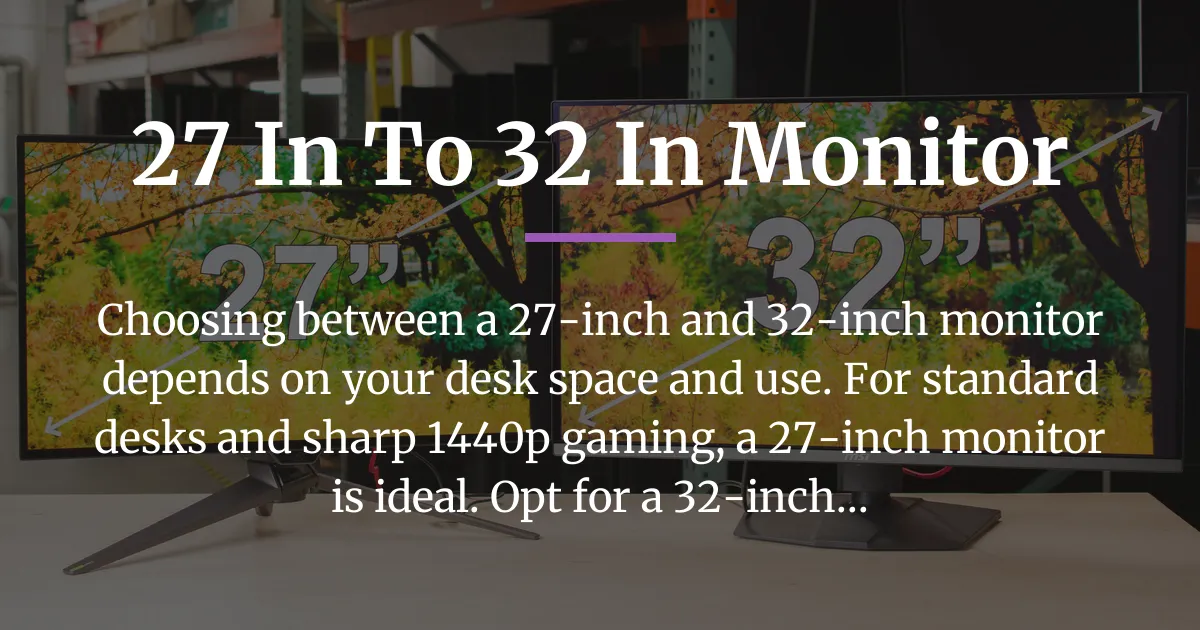
Based on our clarity tests, 27-inch FHD is acceptable for most people, but it is at the limit. If you sit at a normal desk distance (about two feet), text and images on the Dell P2725H and SE2725HM look fine.
However, if you have sharp vision or sit closer, you will see that the picture is not as crisp as on the QHD S2722DGM. For the best sharpness at 27 inches, QHD is preferable.
Which Dell monitor is best for coding?
For coding, we recommend the Dell P2725H. The ability to pivot the screen into a vertical portrait mode is incredibly useful for viewing long lines of code. The sharp IPS panel also makes text easy to read for hours, and the full adjustability ensures you can position it perfectly to avoid neck strain.
Can I use the Dell S2722DGM for photo editing?
The Dell S2722DGM is not ideal for professional photo editing. While its colors are vibrant and it covers 99% of the sRGB gamut well, it does not cover the wider Adobe RGB or DCI-P3 gamuts that professional photographers and designers require. It is a great monitor for enjoying photos and videos, but not for critical color work.