Figuring out computer monitor sizes how to measure is a simple task, but that number opens doors to smarter choices about your workspace, gaming, and daily use. This guide walks you through the exact steps, explains why the measurement works that way, and shows how to use that information to pick the perfect screen.
How to Measure Computer Monitor Sizes
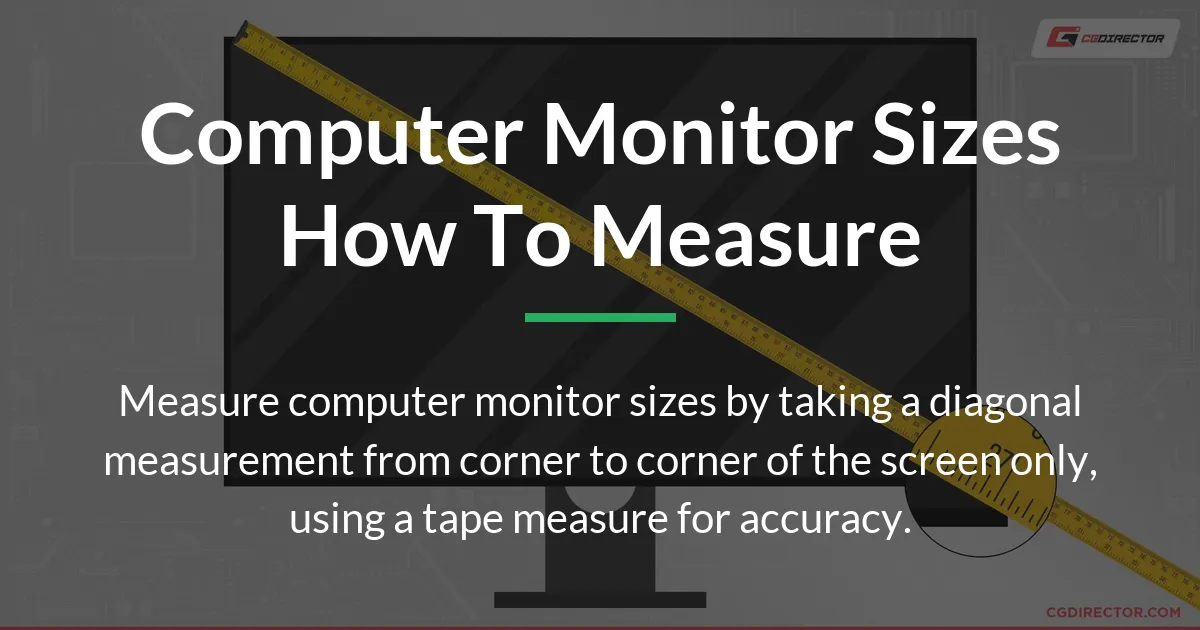
To measure your computer monitor size, find the diagonal distance from one corner of the visible screen area to the opposite corner, and record it in inches. This is the standard way the industry describes monitor sizes, and it gives you a baseline number for comparison.
You only need a flexible measuring tape for this job, as it can lie flat against the screen. A rigid ruler might work if you are careful, but a tape measure is easier to handle for a curved or large surface.
Before you start, identify the actual screen area where the image shows up. Look for the lit rectangle inside the plastic or metal frame, which is called the bezel. Your measurement should ignore this bezel completely and focus solely on the glass or panel that displays content.
Step-by-Step Measurement Guide
- Place the end of your measuring tape at the bottom-left corner of the visible screen. Ensure it is exactly where the picture begins, not on the black or colored border around it.
- Gently stretch the tape diagonally across to the top-right corner of the screen. Keep the tape straight and flat against the surface to avoid any sag or angle that could skew the reading.
- Read the number where the tape meets the top-right corner. This length in inches is your monitor’s size. For example, if it reads 24 inches, you have a 24-inch monitor.
- If your tape shows centimeters, you can convert it to inches by dividing by 2.54, since monitor sizes are always marketed in inches. However, for accuracy, it’s best to use an inch-marked tape directly.
This method applies to all flat screens. For a curved computer monitor, the process is identical—still measure diagonally across the curved surface from corner to corner, following the curve of the screen with your tape. The curve does not change how the diagonal size is determined.
Common Computer Monitor Sizes and Their Uses
Once you have your measurement, it helps to know where it fits in the broader landscape. Monitor sizes fall into general categories that match different needs and desks.
Compact displays, often between 19 and 22 inches, are common for basic tasks. They fit easily on small desks and are enough for web browsing, email, and simple office work without taking up much room.
The versatile standard range is 24 to 27 inches, which is the most common monitor size for good reason. It offers a right balance of screen real estate and desk space, making it ideal for everyday tasks, gaming, and watching videos without overwhelming your setup.
Larger screens, starting at 32 inches and up, cater to immersive gaming and professional work. Graphic designers or video editors might prefer these for detailed visuals, while gamers enjoy the expansive view. These monitors require more desk depth and width, so measuring your space first is crucial.
Ultrawide monitors are a special category described by their elongated shape. A 34-inch ultrawide, for example, has the same diagonal measurement as a standard 34-inch screen but is much wider and shorter. This provides panoramic gaming experiences or extra horizontal space for multitasking with multiple windows side by side.
What Your Diagonal Measurement Doesn’t Tell You
That diagonal number is just the starting point, and it hides some important details about your screen. Understanding these gaps helps you make sense of why two monitors with the same size can feel so different.
Aspect Ratio Changes the Physical Shape
The aspect ratio is the proportion of width to height, and it directly affects how your diagonal inches are distributed. A 27-inch monitor with a standard 16:9 aspect ratio is physically wider and shorter than a 27-inch monitor with a 21:9 ultrawide ratio.
This means the same diagonal measurement can result in very different screen footprints on your desk. For instance, a 24-inch 16:9 monitor might be about 21 inches wide, while a 24-inch 21:9 monitor could be over 25 inches wide, altering how it fits in your space.
Screen Real Estate Versus Bezel Size
Your diagonal measurement covers only the active display area, but the total monitor size includes the bezels. If you are planning a dual monitor setup or fitting a screen into a tight spot, you need to check the manufacturer’s specs for the full dimensions, including the bezel and stand.
This is why your friend’s 27-inch monitor might look larger or smaller than yours—the bezels could be thinner or thicker, changing the overall appearance without affecting the screen measurement itself.
Pixel Density and Resolution Clarity
Monitor size alone says nothing about sharpness. Pixel density, or how many pixels are packed into each inch, depends on the resolution. A 24-inch monitor with a 1080p resolution has larger, less detailed pixels than a 24-inch monitor with a 4K resolution.
So, for tasks like graphic design or reading small text, a higher resolution on the same size screen provides better clarity. This is a key factor often overlooked when just comparing diagonal inches.
Choosing a Monitor Based on Size and Space
With your measurement and this new context, you can now make informed decisions about which monitor suits your life. It all comes down to your desk, your tasks, and your personal preference.
Assessing Your Desk Real Estate
Before buying a new monitor, measure your desk depth and width. Then, look up the exact dimensions of the monitor model you are considering, including its stand and bezels, to ensure it fits comfortably without crowding your keyboard or other items.
For example, a 32-inch monitor might need a desk at least 24 inches deep to allow for proper viewing distance, preventing eye strain. Always leave some extra room for speakers, notebooks, or a cup of coffee.
Matching Size to Your Primary Task
For general use and gaming, 24 to 27 inches is often the right balance. It provides enough space for multitasking without dominating the room, and it pairs well with standard screen resolutions like 1080p or 1440p for a crisp image.
If you work with spreadsheets, coding, or video editing, larger screens or ultrawides offer more simultaneous windows. This can boost productivity by reducing the need to switch between apps constantly.
Competitive gamers sometimes prefer smaller monitors, around 24 inches, because all the action stays within their central field of view for faster reaction times. Meanwhile, immersive gaming benefits from larger screens or ultrawides that wrap your vision.
Considering Multiple Monitors
Two smaller monitors might give you more flexible screen real estate than one large one, but bezels in the middle can break up your view. Measure your desk to see if it can handle dual monitor setups, and think about how you will use the space—for example, having one screen for work and another for reference materials.
Remember that multiple monitors require more graphics power from your computer, so check your computer’s display settings and graphics card compatibility before committing.
Learning how to measure computer monitor sizes correctly is the first step toward a better computing experience. That diagonal number, while standard, is just a piece of the puzzle. By considering aspect ratios, physical footprint, and resolution, you can choose a properly sized monitor that fits your desk and enhances your work or play. Always use your measurement as a tool to guide you, not limit you, in finding the right screen.
Frequently Asked Questions
Do I measure the monitor with the bezel or just the screen?
Measure only the screen area where the image appears, excluding the bezel. This gives you the true display size as manufacturers specify it.
Can I use a ruler instead of a measuring tape?
Yes, a ruler can work if it is long enough and you place it carefully across the diagonal. However, a flexible measuring tape is easier for accuracy, especially on curved screens.
Is a 24-inch monitor measured the same way as a 24-inch TV?
Yes, both monitors and TVs use the same diagonal measurement method from corner to corner of the visible screen. The process is identical for any display.
How do I measure a curved computer monitor?
Measure diagonally from corner to corner, following the curve of the screen with your tape measure. The curvature does not affect the diagonal measurement technique.
My old monitor says 19-inch, but my tape measure shows 18 inches. Why?
This can happen due to slight manufacturing variances or if the bezel is included in your measure. Always measure the screen only, and note that some older models might round sizes differently.
Where is the exact starting point for the measurement?
Start exactly at the bottom-left corner where the active screen begins, not on the bezel. This ensures you are measuring the actual viewable area.
Should I measure in centimeters or inches?
You can measure in either, but monitor sizes are always marketed in inches. If you use centimeters, convert to inches by dividing by 2.54 for the standard number.
Does monitor size affect what resolution I should choose?
Yes, larger monitors benefit from higher resolutions to maintain sharpness. For example, a 27-inch screen is better with 1440p or 4K than 1080p to avoid seeing individual pixels up close.
How much bigger is a 27-inch monitor compared to a 24-inch?
A 27-inch monitor has about 25% more screen area than a 24-inch monitor, making it noticeably larger for multitasking and immersion, but it also requires more desk space.
How do I measure my screen for a protective filter or monitor stand?
For accessories, measure the full front dimensions including the bezel, as filters and stands need to fit the entire monitor body, not just the screen. Check the product specs for exact size requirements.