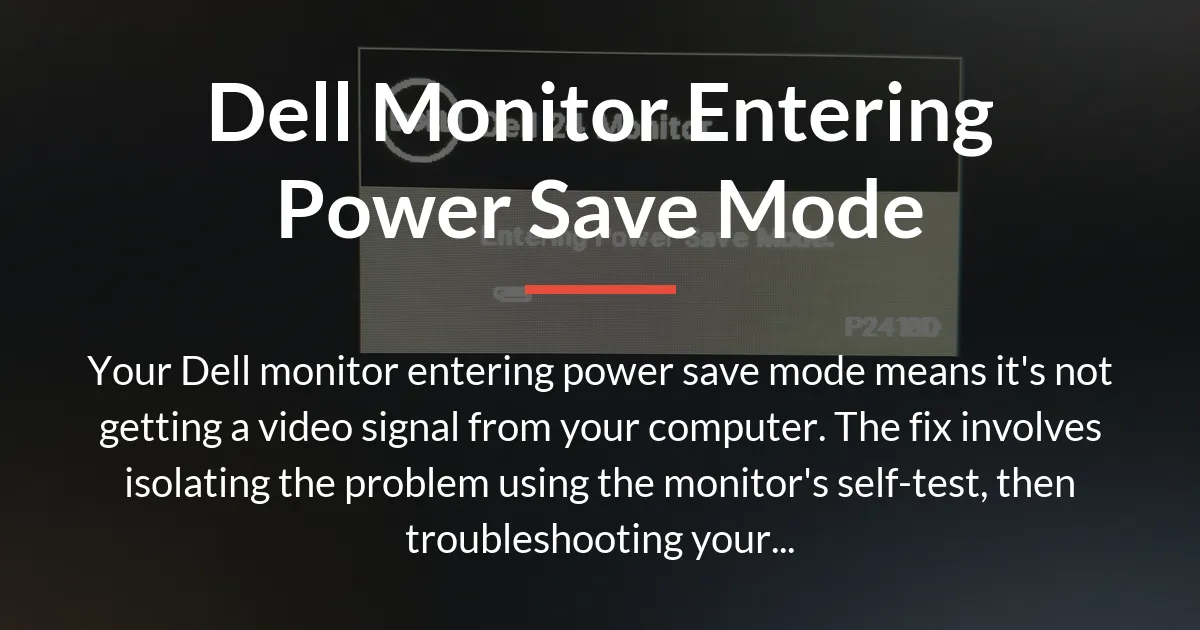
Seeing your Dell monitor entering power save mode with a black screen is incredibly frustrating. You know your computer is on, but your screen is dark and unresponsive. Before you assume the worst, understand this: the monitor is usually just doing its job. That power save message means it’s working but not receiving a valid video signal to display. The problem almost always lies with the signal source—your computer, its settings, or the cable connecting them. This guide will walk you through a logical, step-by-step process to find the real cause and get your display back.
What the Monitor Self-Test Actually Tells You
Your first and most important step is to isolate the monitor itself. Every Dell monitor has a built-in self-test feature designed for this exact situation. It bypasses the computer entirely to check if the monitor’s internal hardware can generate a picture.
To perform the self-test, first turn off your computer. Then, disconnect the video cable from the back of the monitor. With only the power cable connected, press the monitor’s power button. If the monitor is functional, it will typically display a solid color screen, a moving pattern, or a message saying “No Cable Connected” or “Check Signal Cable.”
The result of this test is definitive. If you see any test image or message, your monitor is perfectly healthy. The fault lies elsewhere in the signal chain. If the screen remains completely dark and blank during this test, but the power light is on, the monitor likely has an internal hardware failure and will require professional repair.
The Systematic Troubleshooting Flowchart
Assuming your monitor passed the self-test, the issue is with the video signal. Follow these steps in order. This methodical approach prevents you from skipping ahead and missing a simple fix.
1. Verify Your Computer is Actually On
It sounds obvious, but it’s a common oversight. A computer can appear to be on but might be stuck in a sleep state or failing to boot properly. Listen for the sound of cooling fans or hard drives spinning. Check for lights on the computer case or keyboard, like the Num Lock indicator, and tap the key to see if it toggles. If there are no signs of life, troubleshoot your computer’s power supply first.
2. Inspect and Reseat Every Physical Connection
A loose or faulty connection is a frequent culprit. Turn everything off and unplug the power from both your monitor and computer. Firmly reseat the video cable at both ends—the port on your computer and the port on your monitor. Check the cable for any obvious bends, pin damage, or fraying. If you’re using an adapter, try connecting without it.
3. Test with a Different Cable or Port
Cables can fail internally even if they look fine. If you have a spare HDMI, DisplayPort, or VGA cable, swap it in. Also, try using a different video output port on your computer if available. For example, if you were using DisplayPort, switch to HDMI. This test rules out a bad port or a faulty cable causing the no signal problem.
4. Test the Video Source with Another Device
This step is crucial for final isolation. Connect your Dell monitor to a different working computer, like a laptop. If the monitor works normally, the problem is confirmed to be with your original computer. Conversely, connect a different, known-working monitor to your original computer. If that second monitor also shows no signal, you have definitive proof the issue is with your computer’s video output.
5. Troubleshoot the Computer’s Video Output
Once you’ve narrowed it down to the computer, the investigation moves to software and internal hardware. Begin by starting your computer and waiting a minute, then forcefully restart it by holding the power button. Sometimes a system hang can cause a lack of signal.
If that doesn’t work, try booting into Windows Safe Mode. This loads Windows with only basic drivers. If your display works in Safe Mode, the cause is almost certainly a software or driver conflict. Your next move should be to update or reinstall your graphics card drivers from the manufacturer’s website.
Also, check your display projection settings. On Windows, pressing the Windows Key + P lets you cycle through modes like “Duplicate” or “Extend.” Accidentally selecting “Second screen only” while only one monitor is connected will give you a black screen on your primary display.
Critical Considerations for Persistent Problems
If you’ve completed the flowchart without success, the issue may be more nuanced. These advanced checks address conflicts that basic troubleshooting often misses.
Power State Conflicts in Windows
Windows features designed to save power can sometimes interfere with waking a monitor correctly. Disable “Fast Startup” in your Windows power settings, as this hybrid shutdown state can cause driver issues on boot. Also, look into your advanced power plan settings and temporarily disable options like “USB selective suspend setting” to see if it resolves the conflict.
Firmware and BIOS/UEFI Settings
Your computer’s motherboard firmware controls the initial video output. Enter your BIOS/UEFI setup menu during boot. Once inside, look for a setting related to the primary display or initialization. If your computer has both integrated graphics and a separate video card, ensure the setting matches your setup. As a diagnostic step, you can try resetting the BIOS to its factory default settings, which can clear any incorrect configurations.
Graphics Card Specifics
For desktop computers with a dedicated graphics card, ensure it is properly seated in its slot on the motherboard. Many cards also require supplemental power directly from the power supply unit; check that these cables are firmly connected. If your processor has integrated graphics, physically remove the dedicated video card and connect your monitor to the motherboard’s video port. If this works, it points to a problem with the dedicated card, its drivers, or its power.
When to Contact Dell Support or a Technician
If your monitor failed its own self-test, it requires professional repair. Contact Dell support with your monitor’s Service Tag ready.
If the monitor works with other computers but your computer outputs no signal to any monitor, the issue is with your PC. If you’ve tried integrated graphics, different cables, and BIOS resets, the problem could be a deeper hardware fault with the motherboard or the primary video card slot. At this point, consulting a computer technician is the most efficient next step. Provide them with a list of all the diagnostic steps you’ve already taken.
Frequently Asked Questions
My monitor’s power light is solid green, but the screen is black. What does this mean?
A solid green power light typically means the monitor is on and receiving power but is not receiving an active video signal from the computer. It is in standby or power save mode, waiting for a signal. This confirms you should focus troubleshooting on the computer and cable.
Can a faulty HDMI or DisplayPort cable cause power save mode?
Yes, absolutely. A damaged or failing cable cannot transmit the video signal properly. This is exactly why swapping the cable is a key early step in the troubleshooting process.
Does the Dell monitor entering power save mode happen more with laptops or desktops?
The issue can happen with both, but the causes might differ. Laptops more commonly have software-driven power management conflicts, while desktops may have more physical hardware issues like a loose graphics card or faulty power supply to the card.
Should I update my BIOS to fix this issue?
Updating your motherboard BIOS can fix compatibility bugs that affect video output, but it should not be your first step. Only consider a BIOS update if you have exhausted other software fixes and your motherboard manufacturer lists a relevant fix in the update notes. Incorrect BIOS flashing can seriously damage your system.
How do I stop Windows from putting my monitor to sleep incorrectly?
Go to Windows Settings > System > Power & sleep. Adjust the sleep and screen settings to longer durations or “Never” to test. More importantly, use the “Additional power settings” link to edit your plan and disable “Fast Startup,” which is a more common culprit for wake-up failures.
Can a virus or malware cause my monitor to go into power save mode?
It is highly unlikely. Malware typically aims to steal data or cause disruption, not mimic a hardware signal failure. A persistent no-signal issue is almost always caused by hardware, drivers, or system settings, not malware.
After a Windows update, my Dell monitor won’t wake up. What should I do first?
Boot into Windows Safe Mode. If the display works there, the update likely installed a buggy graphics driver. Use Safe Mode to roll back the driver to the previous version or download and install the latest driver directly from your graphics card manufacturer’s website.
Is there a way to hard reset my Dell monitor?
Yes. Unplug the monitor’s power cable from the electrical outlet. Press and hold the monitor’s power button for 30 seconds to drain residual power. Then, plug it back in and turn it on. This can clear temporary electronic glitches.
My monitor works with my laptop but not my PC. What does this indicate?
This proves your monitor is fine. The problem is isolated to your desktop PC. You need to troubleshoot the PC’s video output, focusing on the graphics card, its drivers, the motherboard settings, and the power supply connections to the card.
Dell System Diagnostic shows no errors. Does that mean my hardware is okay?
Not necessarily. Built-in diagnostics are good for finding major failures but can miss intermittent issues or compatibility problems. A “no error” result means you should continue with the physical and software isolation steps outlined in the troubleshooting flowchart.
Conclusion
Solving the problem of a Dell monitor entering power save mode is a process of elimination. Start by confirming the monitor works with its self-test, then trace the video signal back through the cable to the computer. Methodically check connections, try alternative hardware, and adjust software settings. By following this structured approach, you can diagnose whether the issue is a simple loose cable, a driver conflict, or a more serious hardware fault, saving you time, frustration, and unnecessary expense.