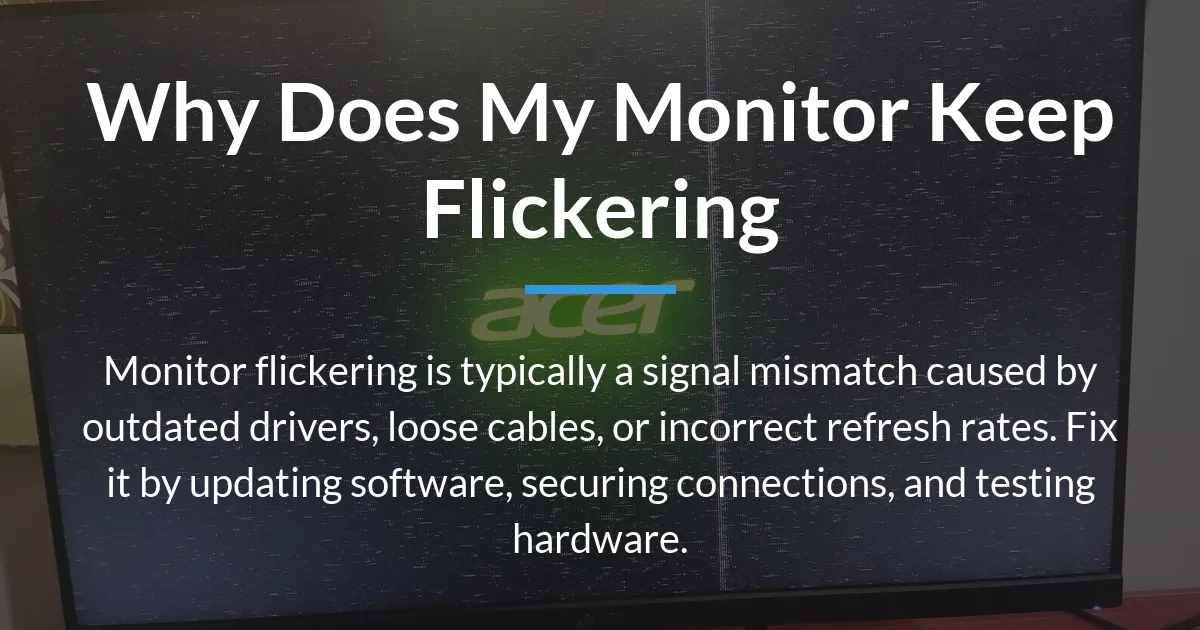
Seeing your monitor screen blink on and off is a frustrating disruption to your work or entertainment. This common issue usually has a straightforward solution when approached methodically.
Building on this, the blinking typically stems from faulty connections, software settings, or outdated drivers. Following a logical troubleshooting sequence from simple to complex fixes will most often restore a stable display.
How to Fix a Monitor Screen That Blinks On and Off
A monitor screen that blinks on and off can be fixed by systematically checking physical connections, adjusting Windows settings like MPO, and ensuring your graphics driver is updated. Begin with immediate hardware checks before moving to software configurations for the fastest resolution.
Consequently, this prioritized approach prevents wasted time on irrelevant fixes. The process below guides you through each diagnostic phase clearly.
First, Rule Out Simple Hardware Problems
Start with a quick sixty-second triage to eliminate obvious failures. This involves a basic power cycle and observing the blink’s pattern for clues.
- Unplug the monitor’s power cord from both the display and the wall outlet, then hold down the power button for at least one minute to drain residual power.
- Note whether the blinking affects a single monitor or all connected displays, and check if it happens during the computer’s BIOS startup screen or only within Windows.
- Ensure your power strip and wall outlet provide stable electricity by plugging the monitor directly into a different socket.
After this, the pattern observation becomes your guide. For instance, blinking that appears on the BIOS screen strongly suggests a hardware fault with the monitor or its cable.
Methodically Check Connections and Cables
Loose or damaged cables are a frequent culprit for intermittent screen blinking. Carefully inspect every physical link between your computer and monitor.
- Firmly reseat the HDMI, DisplayPort, or VGA cable at both the monitor’s port and your computer’s graphics output. Try a different HDMI port on your GPU if available.
- Swap in a different cable that you know works properly to test for a faulty wire. A high-speed, certified cable is best for modern high-refresh-rate monitors.
- Connect the problematic monitor to a different computer or device, like a laptop, to see if the issue follows the display.
Following this, if the blink disappears with a new cable or port, you have found the source. Always ensure connections are secure and free from physical damage.
Resolve Software and Setting Conflicts
Windows features like Multi-Panel Optimization (MPO) can cause blinking, especially with multiple monitors using different refresh rates. Disabling MPO is a common and effective software fix.
To understand why, MPO tries to optimize performance across several displays but can create timing conflicts. This mismatch often manifests as a blinking or black screen when monitors have mixed refresh rates.
Therefore, disabling MPO through a registry edit or GPU control panel usually stops the blinking without harming performance. This addresses the core software conflict that generic troubleshooting misses.
Update and Configure Your Graphics Driver
An outdated, corrupted, or misconfigured graphics driver is a leading software cause of display blinking. Always obtain the latest driver directly from NVIDIA, AMD, or Intel.
After a clean installation, open your GPU control panel to check power management settings. Disable options like “Monitor Sleep” or adaptive power saving that can unintentionally cause the screen to blink.
Diagnosing a Failing Monitor
If all software and connection checks fail, the monitor’s internal hardware might be failing. Specific tests can isolate this before you consider a replacement.
Connect the blinking monitor to a known-good video source, like a different computer or a game console, using a reliable cable. If the blink persists across different sources, the monitor itself is likely defective.
Additionally, listen for a clicking sound or observe a perfectly regular blink interval, such as every five seconds. These signs often point to a failing internal power supply or capacitor within the monitor.
Consequently, this definitive hardware diagnosis saves you from incorrectly blaming your computer. A consistent fault across all tests confirms the monitor needs professional repair or replacement.
Stopping the Blink From Coming Back
Prevent the issue from recurring by maintaining stable system settings and reliable hardware. Keep your graphics drivers updated automatically and avoid frequently changing display configurations.
Furthermore, use a quality surge protector and ensure your computer’s power supply unit provides enough stable wattage for all components. This proactive care minimizes future display disruptions.
Frequently Asked Questions
Can a blinking monitor damage my computer?
A blinking monitor is typically a symptom, not a cause, so it is unlikely to damage your computer. However, the underlying electrical issue causing the blink could potentially affect other components if left unaddressed.
Why does my monitor blink on and off only when I play a game?
Blinking during games often indicates your graphics card is under heavy load, causing driver conflicts or power instability. Try updating your GPU driver or lowering the game’s graphics settings to see if the blinking stops.
Is it safe to disable MPO? Will it hurt my performance?
Disabling MPO is safe for nearly all users and rarely impacts gaming or work performance. It prevents timing conflicts between displays, which can actually improve system stability without noticeable speed loss.
My monitor blinks and makes a clicking sound. What does that mean?
A clicking sound paired with blinking usually signals a failing power supply inside the monitor. This is a hardware issue that generally requires professional repair or replacing the monitor entirely.
I’ve tried everything and my monitor still blinks. What should I do right before buying a new one?
As a final step, test the monitor on a completely different electrical circuit and update your computer’s motherboard BIOS. If the problem continues, consult a technician to confirm hardware failure before purchasing a new display.
Does using an HDMI, DisplayPort, or VGA cable change the chance of blinking?
Digital cables like HDMI and DisplayPort are generally more reliable than analog VGA, but any cable can fail. Ensure your cable is undamaged and supports the bandwidth required for your monitor’s resolution and refresh rate.
Why did my monitor start blinking after a Windows update?
Windows updates can sometimes reset display settings or install incompatible graphics drivers. Rolling back the update or performing a clean reinstall of your GPU driver usually resolves this blinking.
Are certain monitor brands more likely to have this blinking problem?
No major brand is inherently more prone to blinking, though specific models may have firmware quirks. Searching online forums for your monitor’s model number can reveal if others have reported similar issues and fixes.
Can a faulty power strip or outlet cause my monitor to blink?
Yes, an unstable power supply from a faulty strip or wall outlet can absolutely cause blinking. Plug your monitor directly into a different wall outlet to test if this eliminates the problem.
My second monitor blinks, but my main one is fine. Why?
This usually points to a refresh rate mismatch or a cable issue specific to the second monitor. Try setting both monitors to the same refresh rate in Windows display settings or swapping the cables between the two displays.
In summary, fixing a monitor screen that blinks on and off requires a calm, step-by-step diagnostic approach. Start with physical connections, proceed to software settings like MPO, and finally assess the monitor’s own hardware to find a lasting solution.