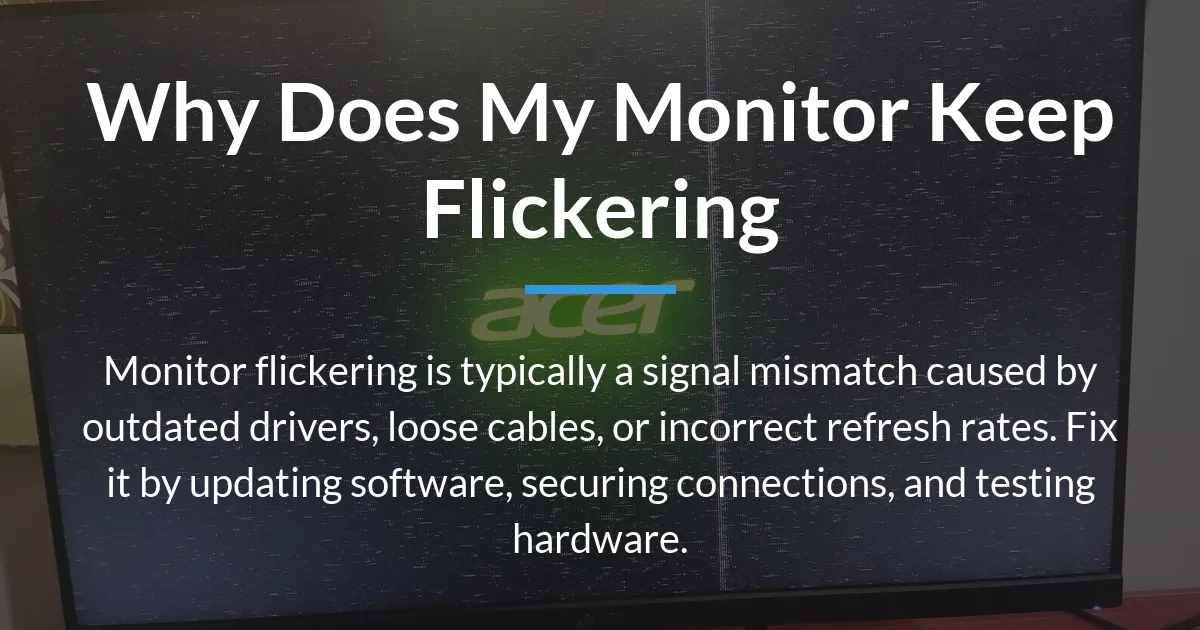
If you are searching for why does my pc monitor keep going black, you are facing a frustrating but common problem. The screen going black typically happens because the signal between your computer and monitor gets interrupted. This interruption can stem from software issues like outdated drivers, physical problems with cables or ports, or incorrect system settings.
Understanding the exact cause requires a systematic approach rather than trying random fixes. This guide will help you diagnose the issue by first observing your symptoms, then following a logical troubleshooting path from simple checks to complex solutions. By the end, you will know how to restore your display and prevent future blackouts.
Why Does My PC Monitor Keep Going Black
To effectively solve the problem, start by recognizing that the black screen is a symptom of a broken signal chain. The signal travels from your computer’s software through the graphics card, cable, and into the monitor. A failure at any point can cause the screen to go black. The key is to identify where the break occurs using the clues from how the black screen behaves.
Many people rush into changing settings or buying new cables without first decoding their specific symptoms. This often leads to wasted time and effort. Instead, follow the steps below to pinpoint the cause accurately. This method ensures you address the root issue rather than just applying temporary fixes.
Decode Your Black Screen Symptoms First
Look closely at when and how the black screen appears. The pattern tells you a lot about the underlying cause. For instance, a screen that blacks out for a few seconds and then recovers suggests a different problem than one that stays black until you restart the computer.
If the black screen happens only when you play games or use full-screen applications, it might relate to graphics driver instability or overheating. In a dual monitor setup, if only one screen goes black, the issue is likely isolated to that monitor’s connection or settings. A permanently black screen with the monitor power light on indicates a complete signal loss, often from hardware failure.
Note these details down as you observe them. They will guide your troubleshooting efforts and help you avoid unnecessary steps. This symptom-based approach is what many online guides miss, but it is crucial for efficient problem-solving.
The Complete PC to Monitor Signal Chain
Think of the display signal as a chain with several links. It starts with the software on your PC, such as the operating system or a game. Then, it passes through the graphics drivers, which act as translators for the graphics hardware. The graphics card processes the signal and sends it out through a port like HDMI or DisplayPort.
From there, the signal travels along the cable to the monitor’s input port. Finally, the monitor’s internal circuitry displays the image. If any link in this chain fails, the screen can go black. Understanding this flow helps you troubleshoot methodically, checking each link from software to hardware.
Common failure points include corrupted drivers, loose cables, damaged ports, or incorrect refresh rates. By visualizing the signal chain, you can see why a single fix does not work for everyone. The solution depends on which link is broken in your specific case.
Structured Fixes From Simple to Complex
Once you have noted your symptoms and understood the signal chain, begin troubleshooting with the easiest and most likely fixes. Gradually escalate to more complex steps if the problem persists. This structured approach saves time and ensures you do not overlook simple solutions.
Stage 1: Rapid Software and Setting Checks
Start by restarting your computer. This simple step can clear temporary glitches in the system or drivers that might cause the black screen. After restarting, check for Windows updates, as operating system patches can resolve compatibility issues that affect display output.
Next, update your graphics drivers properly. Do not rely solely on Windows Update for this. Instead, use the device manager or the manufacturer’s application like NVIDIA GeForce Experience or AMD Adrenalin. Choose the clean installation option to remove old driver files that could be causing conflicts.
Adjust the refresh rate of your monitor. Sometimes, setting the refresh rate too high for your monitor or cable can cause intermittent black screens. Go to display settings and set the refresh rate to the native value recommended for your monitor, usually 60Hz or 144Hz. If you are unsure, try a lower setting like 60Hz to see if the black stops.
Stage 2: Inspecting and Testing Physical Connections
Move on to the physical connections if software checks do not help. First, ensure all cables are firmly seated in their ports on both the computer and the monitor. A loose connection can easily disrupt the signal and cause the screen to go black.
Do more than just reseat the cables. Visually inspect the ports for any damage, such as bent or missing pins. Look at the cable ends for signs of wear or fraying. To test for intermittent breaks, gently wiggle the cable near the connectors while the monitor is on and see if the screen flickers.
The definitive test is to use a different cable that you know works well. If possible, try a different type of cable, such as switching from HDMI to DisplayPort, to rule out a port-specific fault. This step directly addresses the common frustration of buying new cables that do not solve the problem, as it helps confirm whether the issue lies with the cable, port, or something else.
Stage 3: Isolating the Faulty Hardware Component
If the black screen continues, isolate whether the problem is with the PC, cable, or monitor. Connect your monitor to a different computer or laptop. If the monitor works fine, the issue is likely with your original PC.
Conversely, connect a different monitor to your PC. If the new monitor displays correctly, then your original monitor might be faulty. Also, try using a different graphics card output port if your PC has multiple ports. This helps determine if a specific port on your graphics card is damaged.
Through this process, you can conclusively identify the faulty component. This prevents you from replacing parts unnecessarily and gives you clear direction for repairs or replacements.
Advanced Causes and Solutions
For cases where the basic troubleshooting steps do not work, consider these advanced causes. They are less common but important to address if you have exhausted other options.
Power Supply Issues
An underpowered or failing power supply unit (PSU) can cause your graphics card to become unstable, especially under load like during gaming. This instability can lead to black screens as the GPU does not receive consistent power.
If you have recently upgraded your graphics card or added new components, ensure your PSU has enough wattage to support them. Listen for unusual noises from the PSU or check system logs for power-related errors. Replacing the PSU with a higher-quality unit might resolve the issue.
Overheating Graphics Card
Graphics cards generate heat during operation, and if they overheat, they may shut down temporarily to prevent damage, causing a black screen. This often happens during intensive tasks like gaming or video editing.
Monitor your GPU temperature using software like MSI Afterburner or HWMonitor. If temperatures exceed safe limits, typically above 85°C, clean dust from the card’s cooling fans and heatsinks. Ensure your PC case has adequate airflow. If overheating persists, consider reapplying thermal paste to the GPU or upgrading the cooling system.
Operating System and Profile Corruption
Sometimes, corruption in Windows system files or user profiles can lead to display issues. To check for system file corruption, open Command Prompt as administrator and run the command “sfc /scannow”. This scans and repairs corrupted files.
If that does not help, create a new Windows user profile to see if the problem is profile-specific. Corrupted profiles can cause various glitches, including black screens. Creating a new profile isolates the issue to your user settings rather than the entire system.
Frequently Asked Questions
Can a faulty power strip cause my monitor to go black?
Yes, a faulty power strip can cause intermittent power delivery to your monitor, leading to black screens. Try plugging the monitor directly into a wall outlet to rule out power strip issues.
Why does my monitor go black only when playing games?
This usually points to graphics driver instability or GPU overheating under load. Update your drivers and monitor GPU temperatures during gaming to identify the cause.
My laptop screen works but the external monitor goes black. What does this mean?
This indicates the problem is specific to the external monitor connection. Check the cable, port on the laptop, and the monitor’s input settings. Try a different cable or port to isolate the fault.
Is a monitor that goes black for a few seconds broken?
Not necessarily. A black screen for a few seconds often stems from cable issues, refresh rate mismatches, or power saving settings. It is usually fixable without replacing the monitor.
How do I know if my graphics card is failing versus just needing a driver update?
If updating drivers does not help and you experience artifacts like strange colors or lines on screen along with blackouts, your graphics card might be failing. Test with a different card if possible.
Should I change my refresh rate if my monitor keeps going black?
Yes, setting the refresh rate to a lower, native value can resolve black screens caused by compatibility issues. Adjust it in display settings to see if it helps.
Can background apps or Windows Explorer cause a black screen?
Rarely, but conflicting background apps or a crashed Windows Explorer can affect display output. Restarting Windows Explorer or booting in safe mode can help identify software conflicts.
Why did buying new cables not solve the problem?
New cables might not work if the issue lies elsewhere, such as in the graphics card port, monitor input, or software settings. Always test with a known-good cable and isolate the component as described in the troubleshooting stages.
Does this problem happen more with Windows 10 or Windows 11?
Both Windows 10 and Windows 11 can experience black screen issues, often due to driver compatibility or updates. The troubleshooting steps are similar for both operating systems.
When should I stop troubleshooting and contact support or a technician?
If you have tried all software fixes, tested with different cables and monitors, and still experience black screens, it may be a hardware fault like a failing graphics card or internal monitor damage. At this point, professional repair or replacement is advisable.
Final Steps and Summary
To permanently resolve why does my pc monitor keep going black, remember the core principle: diagnose the symptom, follow the signal chain, and test systematically. Start by observing how the black screen behaves, then move from simple software checks to hardware isolation.
This approach ensures you address the root cause rather than applying random fixes. If you have identified a faulty component, such as a cable or graphics card, replace it. For persistent issues, do not hesitate to seek professional help to avoid further damage.
By understanding the reasons behind the black screen, you can not only fix the current problem but also prevent future occurrences through regular driver updates and proper hardware maintenance. Your display should now be stable and reliable.